
Exercise After a Heart Diagnosis: What Is Safe and What Isn't
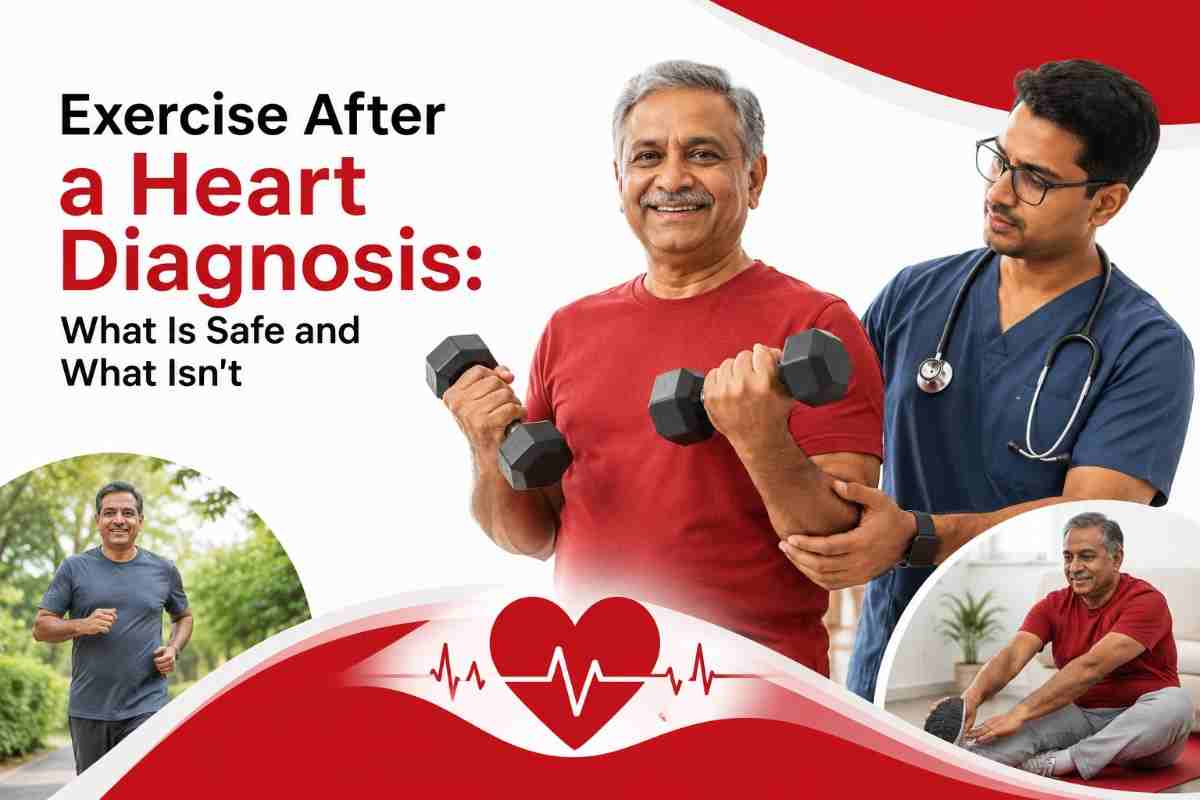
Why Exercise Matters After a Heart Diagnosis
Here’s something that surprises many patients: an inactive lifestyle after a heart diagnosis often does more harm than a carefully managed active one. Deconditioning — the loss of fitness that happens when you avoid all physical activity — can actually worsen how your heart handles everyday tasks like climbing stairs or carrying groceries.
Regular, appropriately dosed exercise after a heart diagnosis can help:
- Strengthen the heart muscle and improve its pumping efficiency
- Improve circulation and help new blood vessels form around narrowed arteries (a process called collateral circulation)
- Lower blood pressure and improve cholesterol profiles
- Help manage blood sugar levels in diabetic patients
- Support healthy weight management
- Reduce anxiety and depression, which are common after a cardiac diagnosis
- Improve overall quality of life and confidence in daily activities
None of this means exercise is a free-for-all. The goal is to match the type, intensity, and duration of activity to your heart’s current capacity — which is exactly why this decision should be made together with your cardiologist rather than through trial and error.
Common Heart Conditions and How They Affect Exercise Capacity
Not all heart diagnoses carry the same exercise implications. Broadly, patients fall into a few categories:
- Coronary artery disease (blockages) — narrowed arteries may limit blood flow to the heart muscle during exertion, which is why symptoms often appear with activity rather than at rest.
- Post-heart attack (post-MI) — the heart muscle may have some areas of reduced function depending on the extent of damage, and recovery timelines vary from person to person.
- Post-angioplasty/stent — many patients recover exercise tolerance well, but the timeline for returning to vigorous activity depends on how the procedure went and any underlying disease elsewhere.
- Post-bypass surgery (CABG) — recovery involves not just the heart but also the healing of the chest incision, which affects the type of upper-body activity that’s safe in the early weeks.
- Heart failure — exercise capacity may be more limited, but structured, low-to-moderate activity is still often recommended under supervision.
- Arrhythmias — irregular heart rhythms may require specific precautions depending on the type and severity.
- Hypertension without other heart disease — generally has the fewest restrictions, though blood pressure control before starting an exercise program matters.
This is why “can I exercise with heart blockage” doesn’t have a single universal answer — a patient with a mild, stable blockage may be cleared for brisk walking and swimming, while someone with unstable symptoms may need further evaluation first.
What Counts as "Safe" Exercise After a Heart Diagnosis?
For most stable heart patients who have been medically cleared, the following are generally considered safe starting points:
- Walking — often the first activity recommended, starting with short, flat walks and gradually increasing distance and pace
- Stationary cycling — low-impact and easy to control intensity
- Swimming or water-based exercise — gentle on joints, though timing after certain procedures (like surgical incisions) needs clearance
- Light strength training — using light weights or resistance bands, usually introduced later in recovery
- Stretching and flexibility exercises — help with overall mobility and relaxation
- Structured cardiac rehabilitation sessions — supervised programs specifically designed for post-cardiac patients
A simple way to think about safe intensity is the “talk test”: if you can comfortably hold a conversation while exercising but would struggle to sing, you’re likely in a safe, moderate zone for most stable heart patients. Your cardiologist may also use more precise measures, such as a target heart rate range based on your stress test results.
Exercises and Activities That Need Caution
Some activities aren’t necessarily forbidden, but they need a more careful, case-by-case decision:
- Jogging or running — safe for some patients once fitness improves, but usually introduced gradually rather than immediately
- Moderate strength training with heavier weights — heavy lifting increases blood pressure suddenly and needs individual clearance
- Exercising in extreme heat or cold — temperature extremes put additional strain on the cardiovascular system
- Exercise shortly after eating a large meal — blood flow is diverted for digestion, which can add strain
- Activities requiring sudden bursts of exertion, like badminton or tennis — the on-off intensity pattern differs from steady-state activity and needs individual assessment
- High-altitude activity or travel to significantly higher altitudes — reduced oxygen levels add cardiac workload
Exercises and Activities Generally Considered Unsafe (Without Clearance)
Until specifically cleared by your cardiologist, it’s generally advisable to avoid:
- Heavy weightlifting or activities involving straining against a closed airway (Valsalva maneuver)
- Competitive sports with unpredictable intensity spikes
- Extreme endurance events (marathons, triathlons) without a structured, supervised build-up
- Isometric exercises that spike blood pressure suddenly, such as heavy static holds
- Any exercise performed while experiencing chest discomfort, unusual breathlessness, or palpitations
- Scuba diving or activities involving significant pressure changes, without specific cardiac clearance
Comparison Table: General Exercise Categories After a Heart Diagnosis
Activity Type | Examples | General Caution Level |
Low-intensity, steady | Walking, gentle cycling, stretching | Usually safe once cleared |
Moderate, steady | Swimming, brisk walking, structured rehab exercises | Safe with gradual progression |
Moderate, variable intensity | Doubles tennis, badminton | Needs individual evaluation |
High-intensity/strain-based | Heavy weightlifting, sprinting, competitive sports | Needs specific clearance |
Extreme exertion | Marathons, high-altitude trekking, scuba diving | Generally avoided without specialist clearance |
This table is a general guide, not a personal prescription — your cardiologist will place your specific situation within (or outside) these categories based on your test results.
How Diagnosis Type Changes the Exercise Plan
- After a heart attack, most patients begin with light walking within days (as advised by their treating team), progressing through a structured cardiac rehabilitation program over several weeks.
- After angioplasty/stenting, many patients can resume light activity within days, with more vigorous activity introduced gradually over subsequent weeks based on follow-up assessment.
- After bypass surgery, in addition to cardiac considerations, the healing sternum (breastbone) usually means avoiding heavy lifting, pushing, or pulling with the arms for a period defined by the surgical team.
- With stable angina, exercise is often encouraged specifically because it can improve symptoms over time, but the intensity needs to stay below the threshold that triggers chest discomfort.
- With heart failure, low-to-moderate supervised exercise is increasingly recommended as part of long-term management, rather than complete rest.
Risk Factors That Affect Your Exercise Tolerance
Certain factors influence how much caution is needed:
- Uncontrolled high blood pressure or diabetes
- Advanced age combined with reduced baseline fitness
- Multiple blocked arteries or reduced heart pumping function
- Irregular heart rhythms
- Obesity
- Smoking history
- Other conditions like kidney disease or peripheral artery disease
These don’t necessarily rule out exercise — they simply mean your plan needs closer supervision and a more gradual pace.
How Diagnosis and Exercise Clearance Are Typically Assessed
Before recommending an exercise plan, your cardiologist will usually consider:
- Clinical history and current symptoms — including any chest pain, breathlessness, or palpitations
- Recent test results — such as ECG, echocardiogram, or angiogram findings
- Exercise stress testing, where appropriate — to see how your heart responds under controlled physical exertion
- Blood pressure and blood sugar control
- Overall functional capacity — how well you currently manage daily activities
This evaluation helps set a personalised, evidence-based starting point rather than a generic recommendation, which is why a proper diagnostic assessment always comes before an exercise plan — never the other way around.
Treatment Options and Where Exercise Fits In
Exercise is one part of a broader heart care plan, which may include:
- Lifestyle modification — diet, weight management, smoking cessation, stress management, and structured physical activity
- Medications — such as those to manage blood pressure, cholesterol, blood thinning, or heart rhythm, prescribed and adjusted based on individual needs
- EECP (Enhanced External Counterpulsation) — a non-invasive treatment that may be considered for certain patients with angina or reduced exercise tolerance due to coronary artery disease, particularly when they are not ideal candidates for further invasive procedures or continue to have symptoms despite standard treatment
- Angioplasty — a procedure to open narrowed arteries using a stent, generally considered for specific patterns of blockage
- Bypass surgery (CABG) — surgical rerouting of blood flow around blocked arteries, generally considered for more extensive or complex blockages
- Cardiac rehabilitation — a structured, supervised program combining exercise training, education, and risk-factor management
No single option “replaces” another across the board — angioplasty, bypass surgery, EECP, medication, and lifestyle changes each serve different roles depending on the specific pattern and severity of heart disease. The right combination is decided based on individual evaluation, not a blanket preference for one approach.
When Might EECP Be Considered?
EECP is sometimes considered for patients who:
- Continue to experience angina (chest discomfort) despite being on optimal medical therapy
- Have exercise limitations due to reduced blood flow to the heart muscle
- Are not currently suitable candidates for angioplasty or bypass surgery, or prefer to explore non-surgical options first
- Want a non-invasive approach to potentially improve circulation and exercise tolerance over a structured treatment course
EECP is not a universal solution, and it isn’t appropriate for every heart condition or every patient — for instance, it’s generally not suitable for those with certain arrhythmias, severe uncontrolled hypertension, or specific valve conditions. Whether it’s a reasonable option for you depends entirely on a cardiologist’s evaluation of your specific heart condition, symptoms, and overall health.
Cardiac Rehabilitation: The Safest Way Back to Activity
If there’s one universally recommended path back to exercise after a significant cardiac event, it’s structured cardiac rehabilitation. These programs typically involve:
- Supervised, monitored exercise sessions with heart rate and, where needed, ECG monitoring
- Gradual, individualised increases in exercise intensity
- Education on heart-healthy living, medication management, and recognising warning signs
- Psychological support, since anxiety after a cardiac diagnosis is extremely common
- A structured bridge between hospital discharge and independent, confident exercise at home
Patients who complete cardiac rehabilitation programs often report not just better physical fitness, but also more confidence in resuming their normal lives.
Warning Signs to Stop Exercising Immediately
Regardless of what activity you’re doing, stop immediately and seek medical attention if you experience:
- Chest pain, pressure, tightness, or heaviness
- Breathlessness that’s disproportionate to your effort or doesn’t improve with rest
- Dizziness, light-headedness, or feeling like you might faint
- Irregular, unusually fast, or unusually slow heartbeat
- Pain spreading to the jaw, neck, back, or arm
- Cold sweats, nausea, or unusual fatigue during activity
If any of these occur suddenly and severely, especially chest pain lasting more than a few minutes, treat it as a medical emergency and seek immediate care rather than waiting to see if it passes.
Benefits of Early Medical Evaluation
Many patients delay seeking a proper cardiac evaluation, either out of fear of what they’ll find out or a belief that mild symptoms aren’t worth mentioning. In reality, an early, thorough evaluation:
- Gives you clarity about your actual heart condition instead of uncertainty
- Allows your exercise and lifestyle plan to be tailored precisely rather than guessed at
- Opens up a wider range of treatment options, since many heart conditions are easier to manage effectively when caught earlier
- Reduces anxiety, since most patients find that knowing their specific situation — even if it requires treatment — is less stressful than not knowing
There’s no need for alarm in seeking this evaluation. Think of it as giving your cardiologist the information needed to say, confidently, “here’s exactly what you can and can’t do.”
Lifestyle Tips for Better Heart Health
Alongside a personalised exercise plan, these habits support long-term heart health:
- Eat a heart-friendly diet — rich in vegetables, fruits, whole grains, and lean proteins, and lower in salt, saturated fat, and processed foods
- Monitor blood pressure and blood sugar regularly, especially if you’re diabetic or hypertensive
- Quit smoking — one of the single most impactful changes for heart health
- Manage stress through relaxation techniques, adequate sleep, and social support
- Take medications exactly as prescribed — never stop or adjust heart medication on your own, even if you’re feeling better
- Maintain a healthy weight, as excess weight adds strain on the heart
- Stay consistent — regular, moderate activity done consistently is more valuable than occasional intense bursts
Frequently Asked Questions
1. What is the best diet plan for heart patients?
Many patients with heart blockages can exercise safely once their cardiologist evaluates the severity and stability of the blockage and clears an appropriate activity level.
2. How soon after a heart attack can I start exercising?
This varies by individual, but most patients begin gentle activity like short walks within days under medical guidance, with a structured increase over the following weeks through cardiac rehabilitation.
3. What is the best exercise for heart patients?
Walking is often the most accessible and well-tolerated starting point, with cycling and swimming as other commonly recommended low-impact options, once cleared individually.
4. Is walking enough exercise for heart health?
For many patients, regular brisk walking provides substantial cardiovascular benefit, especially in the early stages of recovery or for those newly diagnosed.
5. Can exercise reverse heart blockage?
Exercise alone doesn’t reverse existing blockages, but combined with lifestyle changes and medical treatment, it can improve circulation, symptoms, and overall heart function over time.
When Should You Consult a Cardiologist?
You should schedule a consultation if you:
- Have been recently diagnosed with a heart condition and haven’t yet discussed an activity plan
- Experience chest discomfort, breathlessness, or unusual fatigue during daily activities or exercise
- Are unsure which exercises are appropriate for your specific diagnosis
- Have diabetes, hypertension, or other risk factors and want a heart health assessment
- Are considering returning to a more vigorous fitness routine or sport after a cardiac event
Seek emergency care immediately if you experience sudden, severe chest pain, pain radiating to the arm or jaw, sudden severe breathlessness, or fainting — do not wait for a scheduled appointment.
Why Choose KGK Hospital?
KGK Hospital, located on Poonamallee High Road in Arumbakkam, Chennai, is one of the few centers in the city dedicated specifically to EECP therapy and non-invasive cardiac care. This focus matters for patients trying to figure out “what exercise is safe for me now” — the team regularly works with individuals managing angina, reduced exercise tolerance, heart blockage, heart failure, and post-cardiac-event recovery.
The hospital is led by Dr. K G Krishnaraja, MD, founder and lead physician, who specialises in non-invasive cardiology with focused clinical experience in EECP therapy. He personally reviews each patient’s medical history and test results before designing a treatment and activity plan, and takes the time to explain the reasoning in plain language.
Patients considering their options can expect:
- A dedicated, experienced cardiology team personally involved in evaluating exercise capacity and overall heart health, rather than a generic protocol
- Non-surgical, FDA-approved EECP therapy delivered without hospitalisation, surgical preparation, or recovery downtime
- A free initial consultation to discuss your condition and whether EECP or another approach is appropriate for you
- Convenient accessibility from Anna Nagar and surrounding neighbourhoods, which matters when a treatment course involves multiple sessions over several weeks
- Care for related conditions including diabetic heart complications, peripheral artery disease, and post-surgery cardiac rehabilitation
If you’re looking for heart care in Arumbakkam, EECP treatment in Chennai, or a heart specialist consultation, KGK Hospital is open Monday to Sunday, 11:00 AM to 5:00 PM, at Poonamallee High Road, opposite Panchali Amman Koil Street, Arumbakkam, Chennai 600106. You can call or WhatsApp +91 94456 468 88 to schedule a free consultation.
Conclusion
A heart diagnosis doesn’t have to mean the end of an active life — for most patients, it means the beginning of a smarter, more informed relationship with physical activity. Walking, swimming, cycling, and structured cardiac rehabilitation are safe and beneficial for the vast majority of stable heart patients, while high-intensity, sudden-exertion, or heavy-strain activities usually need individual clearance first. The specific line between “safe” and “not yet” depends entirely on your diagnosis, test results, and how your heart responds to exertion — which is exactly why generic advice, including everything in this article, is a starting point for conversation rather than a personal prescription.
If you’ve recently been diagnosed with a heart condition and aren’t sure what level of activity is right for you, the most valuable next step is a proper evaluation with a qualified cardiologist who can look at your specific heart, your specific test results, and your specific life — and tell you, clearly, what you can safely do next.

About Author
At placerat eleifend nulla inceptos per dolor lacinia posuere. Rhoncus sociosqu dolor pharetra torquent interdum curabitur erat pellentesque.
Share Post :
Recent Posts
-
 Exercise After a Heart Diagnosis: What Is Safe and What Isn't
 -
 Heart-Healthy Diet Tips for Preventing Coronary Artery Disease
 -
 Cholesterol and Heart Health: What Your Numbers Really Mean
 -
 High Blood Pressure and Heart Disease: Understanding the Risk
 -
 Diabetes and Heart Disease: Why Early Prevention Matters
Categories
- What is EECP? (Educational)
- EECP vs Surgery (Comparison)
- Heart Health Tips Diabetes & Heart Care
- Patient Stories
- EECP in Tamil (தமிழில் EECP)
- Doctor Articles & Expert Advice
Subscribe Newsletter
Signup our newsletter to get update information, news, insight or promotions.
