
EECP for Peripheral Artery Disease
Conditions We Treat
Maecenas curae eu quis vehicula mus mattis blandit ullamcorper litora.
Heart Conditions
Diabetes & Vascular
Surgical Alternatives
Special Patient Groups
Start Your Healing Journey Today!
Maecenas curae eu quis vehicula mus mattis blandit ullamcorper litora.
Start Your Healing Journey Today!
Maecenas curae eu quis vehicula mus mattis blandit ullamcorper litora.
EECP for Peripheral Artery Disease Chennai — Non-Surgical Leg Circulation Care
When Walking Becomes Something You Have to Think About
You used to walk without thinking. Now every few minutes, a cramping pain in your calves forces you to stop. You wait for it to ease, then carry on, knowing it will return. You have started planning routes around how far you can walk before the pain sets in. Stairs have become an effort. Standing too long is uncomfortable. And somewhere in the back of your mind, you are worried about where this is heading.
Leg pain caused by blocked arteries is not something to push through and hope will improve on its own. It is your body telling you that the blood supply to your legs is being restricted — and without attention, that restriction tends to worsen over time. The question most patients ask at this point is not whether something needs to be done, but whether there is a way to address it that does not involve another procedure or surgery.
What Peripheral Artery Disease Is and How It Affects Daily Life
Peripheral artery disease, commonly called PAD, occurs when the arteries supplying blood to the legs become narrowed or partially blocked due to plaque buildup — the same process that causes coronary artery disease in the heart. The result is reduced blood flow to the muscles of the lower limbs, which produces pain, cramping, and heaviness during activity. This is known as claudication. In more advanced cases, symptoms can occur even at rest, and poor circulation can lead to cold feet, slow-healing wounds, and in severe cases, tissue damage.
PAD is particularly common in patients who are diabetic, have high blood pressure, or have a history of heart disease. Because the same arterial disease that affects the legs often affects the coronary arteries too, patients with PAD frequently carry a combined cardiac and vascular risk profile. This makes a treatment approach that supports overall circulatory health — rather than addressing one artery or one limb in isolation — clinically relevant for many PAD patients.
How EECP for Peripheral Artery Disease in Chennai Improves Leg Circulation
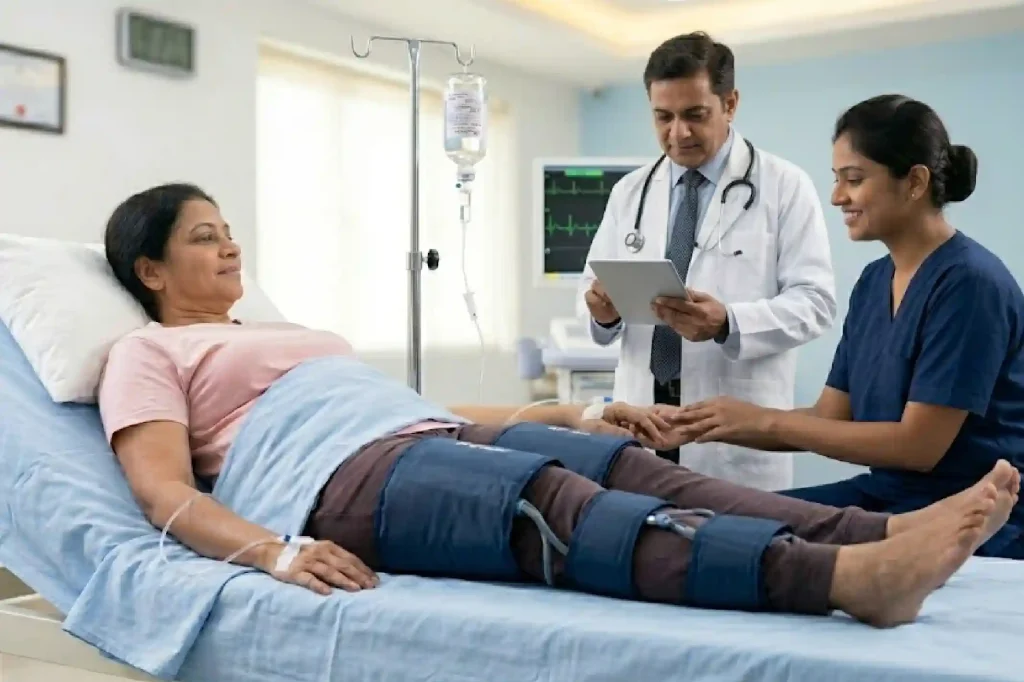
EECP, or Enhanced External Counterpulsation, is an FDA-approved, non-surgical therapy that works by improving blood flow through the vascular system using an entirely external process. Compression cuffs placed on the calves, thighs, and lower body inflate in coordination with the heartbeat, propelling oxygenated blood through the peripheral vessels with each cardiac cycle. This systematic circulatory stimulation is delivered across 35 outpatient sessions.
For patients with peripheral artery disease seeking non-surgical treatment in Anna Nagar Chennai, this improvement in blood delivery to the lower limbs can translate into reduced claudication — less leg pain during activity, improved walking distance, better skin and tissue health in the feet and lower legs, and overall improved vascular function. Because EECP works through the body’s own circulatory system rather than targeting one specific blockage, it supports the broader peripheral vascular environment rather than offering a single-point fix. There is no surgery, no anesthesia, and no recovery period between sessions.
Situations Where EECP Is Most Relevant for PAD Patients
You experience recurring leg pain or cramping during walking that forces you to stop and rest before continuing, a pattern consistent with intermittent claudication.
You have been diagnosed with peripheral vascular disease and your vascular specialist has recommended conservative management rather than surgical intervention at this stage.
You are a diabetic patient with poor circulation in the lower limbs, and you are concerned about the risk of slow-healing wounds or further vascular complications.
You have PAD alongside a cardiac condition such as coronary artery disease or heart failure, and you are looking for EECP treatment for leg pain due to blocked arteries in Chennai that addresses both concerns simultaneously.
You have been told that surgical options for your PAD — such as angioplasty of the leg arteries or bypass grafting — carry elevated risk given your overall health profile.
You want to improve leg circulation through a supervised, evidence-informed therapy before considering more invasive vascular interventions.
Why PAD Patients Across Chennai Choose KGK Hospital for EECP
KGK Hospital’s approach to peripheral artery disease is grounded in the understanding that PAD and cardiac vascular disease share the same root cause — arterial narrowing driven by atherosclerosis — and that improving systemic circulation benefits the patient as a whole. Dr. Krishnaraja reviews each patient’s vascular history, cardiac profile, and current symptoms before designing an EECP session plan that is appropriate for their specific stage of peripheral vascular disease.
At KGK Hospital, the non-invasive setting means that patients with complex profiles — those managing PAD alongside diabetes, hypertension, or heart conditions — can receive structured circulatory support without the procedural risk that their combined health history would introduce in a surgical environment. Each session is conducted on an outpatient basis, lasting approximately one hour, with no preparation required beyond attending consistently.
The hospital is located on Poonamallee High Road in Arumbakkam, easily reachable for patients from Anna Nagar, Koyambedu, Mogappair, Vadapalani, and Nungambakkam. Sessions are available Monday to Saturday from 9 AM to 5 PM. Patients who want to understand what PAD vascular treatment without surgery at KGK Hospital costs, or who are also managing related cardiac conditions and want to discuss both together, are encouraged to bring their full reports to the first consultation.
Find Out Whether EECP Is the Right Step for Your Leg Circulation
If you are managing peripheral artery disease and want to understand whether EECP for peripheral artery disease in Chennai is suitable for your situation, visit KGK Hospital at Poonamallee High Road, Arumbakkam, Chennai 600106. Call or reach the team on WhatsApp to schedule a time with Dr. Krishnaraja, available Monday through Saturday from 9 AM to 5 PM. Bring your recent vascular and cardiac reports and receive a clear, honest assessment.
EECP therapy outcomes for peripheral artery disease vary based on individual health status, the severity of arterial blockage, and the presence of other conditions. The content on this page is for informational purposes only and does not replace professional medical advice. Please consult Dr. Krishnaraja or a qualified physician before beginning any treatment for peripheral artery disease.
Frequently Asked Questions
What is your service?
Lorem ipsum dolor sit amet, consectetur adipiscing elit. Ut elit tellus, luctus nec ullamcorper mattis, pulvinar dapibus leo.
Where are you located?
Lorem ipsum dolor sit amet, consectetur adipiscing elit. Ut elit tellus, luctus nec ullamcorper mattis, pulvinar dapibus leo.
Wait. What is WordPress?
Lorem ipsum dolor sit amet, consectetur adipiscing elit. Ut elit tellus, luctus nec ullamcorper mattis, pulvinar dapibus leo.
- How We Work
You are capable of breaking free from negative thought patterns
Appointment
Dictum ornare torquent pretium litora risus odio vulputate feugiat amet
Consultation
Dictum ornare torquent pretium litora risus odio vulputate feugiat amet
Sessions
Dictum ornare torquent pretium litora risus odio vulputate feugiat amet
Evaluation
Dictum ornare torquent pretium litora risus odio vulputate feugiat amet
