
Cholesterol and Heart Health: What Your Numbers Really Mean
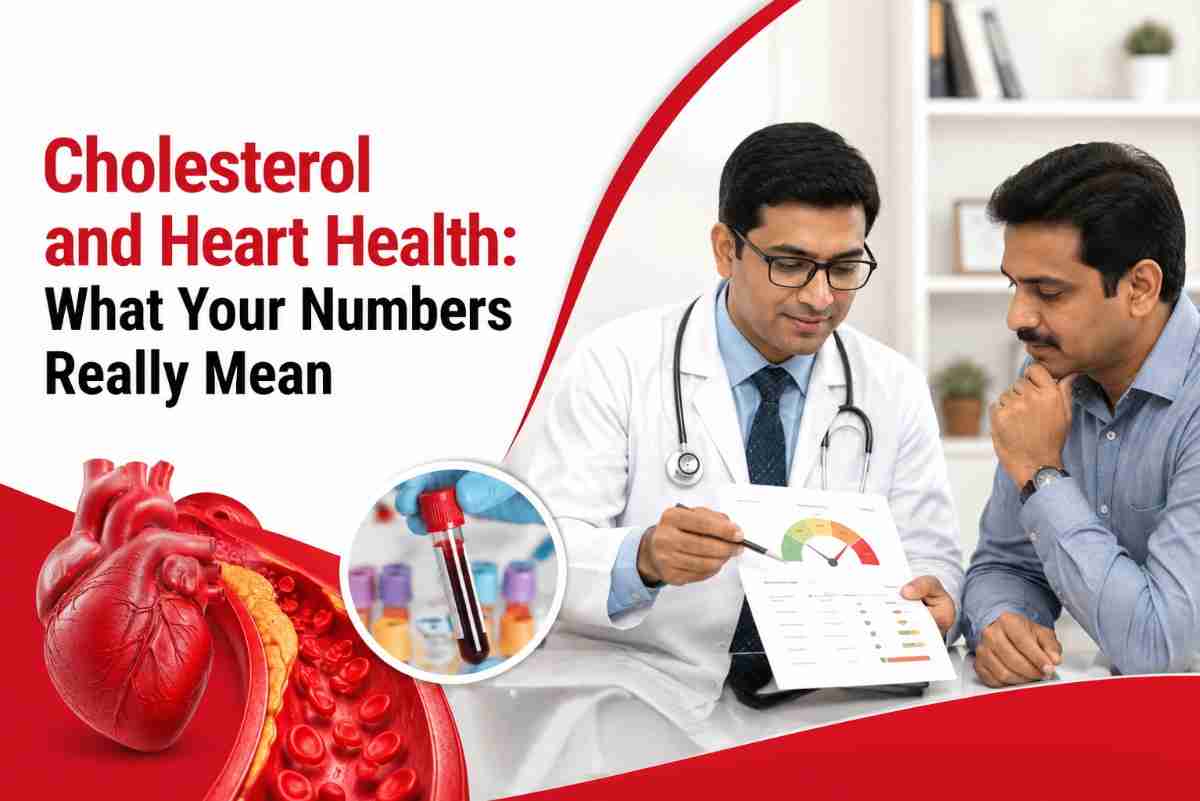
What Is Cholesterol, and Why Does It Matter for Your Heart?
Cholesterol is a waxy, fat-like substance that your body needs for building cells, producing hormones, and supporting various bodily functions. Your liver produces most of the cholesterol you need, with the remainder coming from the food you eat.
Featured Snippet Answer — Why does cholesterol matter for heart health? Cholesterol matters for heart health because excess LDL cholesterol can build up in the walls of arteries, forming plaque that narrows blood vessels and increases the risk of heart attack and other cardiovascular complications.
The issue isn’t cholesterol’s existence — it’s cholesterol’s balance. Too much of certain types, combined with too little of the protective type, tips the scale toward increased cardiovascular risk over time.
Understanding LDL, HDL, and Triglycerides
Your cholesterol report typically includes several values, and understanding what each represents helps make sense of your overall risk picture.
Marker | What It Represents | General Impact on Heart Health |
LDL (Low-Density Lipoprotein) | Often called “bad” cholesterol | Higher levels contribute to plaque buildup in arteries |
HDL (High-Density Lipoprotein) | Often called “good” cholesterol | Helps remove excess cholesterol from the bloodstream; higher levels are generally favourable |
Triglycerides | A type of fat in the blood | High levels are associated with increased cardiovascular risk, especially combined with low HDL |
Total Cholesterol | Combined measure of LDL, HDL, and a portion of triglycerides | Provides a general overview, though LDL and HDL individually matter more for risk assessment |
Featured Snippet Answer — What is a good cholesterol level? While ideal ranges vary by individual risk factors, general guidance suggests LDL below 100 mg/dL, HDL above 40 mg/dL (men) or 50 mg/dL (women), and triglycerides below 150 mg/dL — though your doctor may recommend different targets based on your specific cardiovascular risk profile.
It’s worth noting that these are general reference ranges — your individual target levels may differ based on factors like existing heart disease, diabetes, or other risk factors, which is something your doctor will factor in.
How High Cholesterol Damages the Heart
Featured Snippet Answer — What cholesterol level causes heart disease? There isn’t a single specific cholesterol number that “causes” heart disease on its own; rather, sustained high LDL cholesterol, especially combined with other risk factors, gradually contributes to atherosclerosis — the buildup of plaque that narrows coronary arteries and increases heart attack risk.
The process typically unfolds like this:
- Excess LDL cholesterol circulates in the bloodstream and can enter artery walls
- Over time, this cholesterol accumulates, forming plaque deposits
- Plaque buildup narrows the artery, restricting blood flow to the heart muscle
- If a plaque ruptures, a blood clot can form, potentially blocking the artery completely — this is what triggers a heart attack
This is a gradual process, often developing silently over many years, which is exactly why understanding and managing your cholesterol early matters so much.
Symptoms of High Cholesterol
Here’s an important truth many patients don’t expect: high cholesterol itself typically has no symptoms. You cannot feel your cholesterol levels the way you might feel a fever or a headache.
In rare cases of very high, often genetically-driven cholesterol levels, some physical signs may appear:
- Yellowish deposits of cholesterol under the skin, particularly around the eyes (xanthelasma) or in tendons (xanthomas)
- A greyish-white ring around the cornea of the eye in some individuals (arcus senilis), particularly at a younger age
For the vast majority of people, however, high cholesterol is entirely silent until it has already contributed to significant artery narrowing — at which point symptoms are actually those of the resulting heart disease, such as chest discomfort or breathlessness, rather than the cholesterol itself.
This is precisely why routine blood testing, rather than symptom-watching, is the only reliable way to know your cholesterol levels.
Risk Factors for High Cholesterol
Several factors influence cholesterol levels, some within your control and others not:
Modifiable risk factors:
- Diet high in saturated and trans fats
- Sedentary lifestyle
- Obesity
- Smoking (which can lower protective HDL cholesterol)
- Excessive alcohol consumption
- Poorly controlled diabetes
Non-modifiable risk factors:
- Family history of high cholesterol or early heart disease
- Genetic conditions such as familial hypercholesterolemia
- Age (cholesterol levels often rise with age)
- Gender (patterns can shift, particularly in women after menopause)
Understanding which of these apply to you helps your doctor determine appropriate testing frequency and target cholesterol levels for your individual situation.
How Is High Cholesterol Diagnosed?
Diagnosing high cholesterol is refreshingly straightforward compared to many cardiac conditions:
- Lipid profile blood test – measures LDL, HDL, triglycerides, and total cholesterol, usually requiring fasting beforehand for the most accurate triglyceride reading
- Cardiovascular risk assessment – your doctor considers your cholesterol alongside other factors like blood pressure, diabetes, smoking history, and family history to determine overall risk
- Additional testing, if needed – such as an ECG, echocardiogram, or stress test, if there’s reason to suspect cholesterol has already contributed to coronary artery disease
Because interpreting cholesterol numbers depends heavily on your broader risk profile, it’s best discussed directly with your doctor rather than compared against generic online reference ranges alone.
Treatment Options for Managing Cholesterol and Related Heart Disease
Management approaches range from lifestyle-focused strategies to medical and, in specific cases, procedural interventions when cholesterol has already led to significant coronary artery disease.
Treatment Option | General Purpose | Typically Considered When |
Lifestyle modification | Improve cholesterol balance naturally | Always, as first-line management |
Medications (e.g., statins) | Lower LDL cholesterol, reduce cardiovascular risk | Lifestyle changes alone insufficient, or high baseline risk |
EECP | Improve blood flow non-surgically | Persistent angina from cholesterol-related coronary artery disease |
Angioplasty | Open blocked coronary arteries | Significant blockage from plaque buildup |
Bypass surgery | Reroute blood flow surgically | Complex multi-vessel coronary artery disease |
Cardiac rehabilitation | Structured recovery and long-term risk reduction | After a cardiac event related to cholesterol-driven disease |
Lifestyle Modifications
Dietary changes, regular physical activity, weight management, and smoking cessation can meaningfully improve cholesterol levels for many individuals, particularly when adopted consistently over time.
Medications
Statins are among the most commonly prescribed medications for managing high LDL cholesterol, though other medication classes exist for specific situations, such as high triglycerides. The right choice and dosage depend on your individual risk profile and should be determined by your treating doctor.
EECP (Enhanced External Counterpulsation)
For patients whose cholesterol has already contributed to coronary artery disease, and who continue to experience angina despite optimal cholesterol and medical management, EECP may be a reasonable non-surgical option to discuss. It supports circulation alongside — not instead of — cholesterol management, and suitability depends on individual cardiac evaluation.
Angioplasty and Bypass Surgery
When cholesterol-related plaque buildup has caused significant coronary artery blockages, procedures like angioplasty or bypass surgery may be recommended, depending on the extent and pattern of disease.
Cardiac Rehabilitation
A structured, supervised program supporting recovery after a cholesterol-related cardiac event, combining exercise, dietary guidance, and ongoing monitoring.
No single approach here is universally best. The right combination depends on your specific cholesterol pattern, overall cardiovascular risk, and whether coronary artery disease has already developed — all of which require evaluation by a qualified cardiologist.
When Might EECP Be Considered?
EECP may be worth discussing with your cardiologist if you:
- Have developed coronary artery disease related to long-standing high cholesterol
- Continue to experience angina despite optimal cholesterol management and medical therapy
- Are not an ideal candidate for angioplasty or bypass surgery due to other health factors
- Are interested in a non-invasive option to potentially support circulation alongside your existing treatment plan
EECP is not suitable for every patient, and certain cardiac or health conditions can rule it out. A cardiologist can determine candidacy only after a thorough evaluation of your cholesterol history, cardiac function, and overall health.
Benefits of Early Medical Evaluation
Given that high cholesterol is typically silent, timely testing and evaluation offer meaningful advantages:
- Identifying elevated cholesterol before it contributes to significant artery damage
- Allowing lifestyle and, if needed, medication adjustments before complications develop
- Establishing a baseline to track changes over time
- Providing a clearer overall cardiovascular risk picture when combined with other factors like blood pressure and blood sugar
Since you cannot feel high cholesterol, periodic testing — as recommended by your doctor based on your age and risk factors — is the only reliable way to stay ahead of it.
How to Lower Cholesterol Naturally: Lifestyle Tips
- Choose heart-healthy fats – favour unsaturated fats found in nuts, seeds, and olive oil over saturated and trans fats
- Increase fibre intake – soluble fibre from foods like oats, beans, and fruits can help lower LDL cholesterol
- Stay physically active – regular exercise can help raise protective HDL cholesterol and improve overall cardiovascular health
- Maintain a healthy weight – even modest weight loss can positively affect cholesterol levels for many individuals
- Limit saturated and trans fats – found in fried foods, processed snacks, and certain baked goods
- Avoid smoking – smoking lowers HDL cholesterol and damages blood vessels, compounding cardiovascular risk
- Moderate alcohol intake – excessive consumption can negatively affect cholesterol and triglyceride levels
- Get regular cholesterol screening – as recommended by your doctor, to track progress and catch changes early
Frequently Asked Questions
1. What cholesterol level causes heart disease?
There’s no single specific number that directly causes heart disease; rather, sustained high LDL cholesterol, especially alongside other risk factors, gradually contributes to plaque buildup and increased cardiovascular risk over time.
2. How can I lower my cholesterol naturally?
Dietary changes favouring healthy fats and fibre, regular physical activity, maintaining a healthy weight, and avoiding smoking are all evidence-based ways to improve cholesterol levels naturally.
3. What is the difference between LDL and HDL cholesterol?
LDL is often called “bad” cholesterol because high levels contribute to artery plaque buildup, while HDL is called “good” cholesterol because it helps remove excess cholesterol from the bloodstream.
4. Can high cholesterol cause a heart attack?
Yes, sustained high LDL cholesterol can contribute to coronary artery disease, and if a plaque deposit ruptures and forms a blood clot, it can trigger a heart attack.
5. Does high cholesterol have any symptoms?
Typically no — high cholesterol usually causes no noticeable symptoms, which is why blood testing, rather than how you feel, is the reliable way to know your levels.
When Should You Consult a Cardiologist?
Consider scheduling a cardiology consultation if you have:
- A cholesterol report showing elevated LDL, low HDL, or high triglycerides, particularly alongside other risk factors
- A family history of high cholesterol or early heart disease
- Symptoms like chest discomfort or breathlessness alongside known high cholesterol
- Difficulty achieving cholesterol control despite lifestyle changes
Seek emergency medical care immediately if you experience sudden chest pain or pressure, pain spreading to the arm or jaw, severe breathlessness, cold sweats, or fainting — these require urgent evaluation regardless of your cholesterol history.
Why Choose KGK Hospital?
KGK Hospital, located on Poonamallee High Road in Arumbakkam, Chennai, is a specialised cardiac care center focused on the evaluation and non-surgical management of cholesterol-related heart disease and other cardiac conditions.
The hospital’s approach includes:
- A dedicated focus on non-surgical heart care, including EECP therapy for eligible patients with cholesterol-related coronary artery disease
- Individualised cardiology assessment led by Dr. Krishnaraja, with careful interpretation of cholesterol reports in the context of each patient’s overall cardiovascular risk
- A patient-first consultation approach, taking the time to explain what cholesterol numbers actually mean in clear, practical terms
- Accessibility for patients from Anna Nagar, Koyambedu, Mogappair, Vadapalani, Nungambakkam, and across Chennai seeking cholesterol-related heart care
- Evaluation-based treatment planning, ensuring recommendations reflect each patient’s specific lipid profile and cardiac findings
KGK Hospital’s approach recognises that understanding your cholesterol report clearly — rather than feeling confused or alarmed by a printout of numbers — is the first step toward genuinely managing your heart health.
Conclusion
Cholesterol numbers can feel intimidating on paper, but they don’t have to be. Understanding what LDL, HDL, and triglycerides actually represent — and how they relate to your heart’s long-term health — puts you in a much stronger position to make informed decisions, whether that means adjusting your diet, starting medication, or simply monitoring your levels more closely.
If your cholesterol report has left you with more questions than answers, or if you’d like a clearer picture of your overall cardiovascular risk, consider discussing your specific numbers with a cardiologist. A personalised conversation about your results is worth far more than comparing your report to a generic online chart.

About Author
At placerat eleifend nulla inceptos per dolor lacinia posuere. Rhoncus sociosqu dolor pharetra torquent interdum curabitur erat pellentesque.
Share Post :
Recent Posts
-
 Exercise After a Heart Diagnosis: What Is Safe and What Isn't
 -
 Heart-Healthy Diet Tips for Preventing Coronary Artery Disease
 -
 Cholesterol and Heart Health: What Your Numbers Really Mean
 -
 High Blood Pressure and Heart Disease: Understanding the Risk
 -
 Diabetes and Heart Disease: Why Early Prevention Matters
Categories
- What is EECP? (Educational)
- EECP vs Surgery (Comparison)
- Heart Health Tips Diabetes & Heart Care
- Patient Stories
- EECP in Tamil (தமிழில் EECP)
- Doctor Articles & Expert Advice
Subscribe Newsletter
Signup our newsletter to get update information, news, insight or promotions.
