
Heart-Healthy Diet Tips for Preventing Coronary Artery Disease
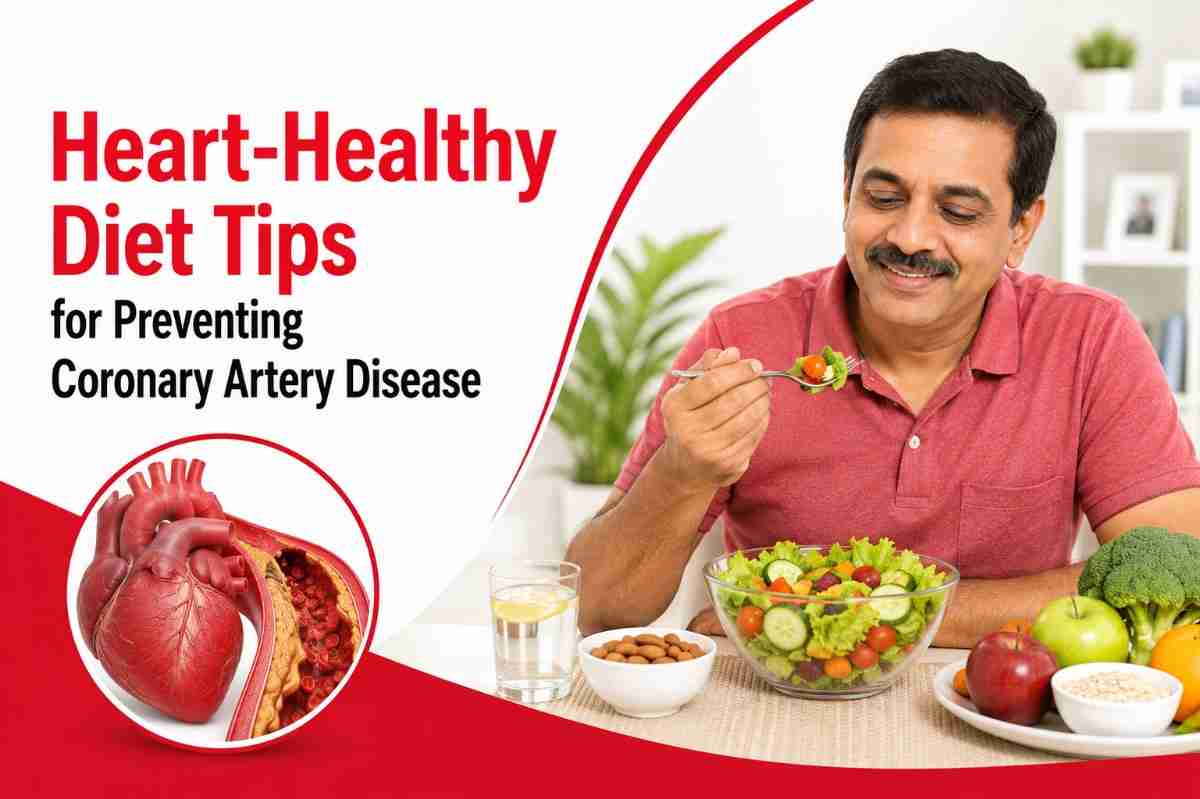
Why Diet Matters for Coronary Artery Disease Prevention
Coronary artery disease develops when plaque — made up of cholesterol, fat, and other substances — builds up in the arteries supplying the heart. Diet directly influences several of the key factors driving this process:
- Cholesterol levels – certain foods raise LDL (“bad”) cholesterol, while others help manage it
- Blood pressure – sodium intake, in particular, has a direct effect on blood pressure levels
- Blood sugar and insulin sensitivity – diet significantly influences diabetes risk and control, a major contributor to coronary artery disease
- Body weight – excess weight, particularly around the abdomen, adds cardiovascular strain
- Inflammation – some dietary patterns are associated with lower levels of chronic inflammation, which plays a role in plaque formation
Featured Snippet Answer — How does diet help prevent coronary artery disease? A heart-healthy diet helps prevent coronary artery disease by improving cholesterol levels, supporting healthy blood pressure and blood sugar, and maintaining a healthy weight — all of which reduce the factors that contribute to plaque buildup in the arteries.
How Poor Diet Contributes to Coronary Artery Disease
Understanding the mechanism helps make the “why” behind dietary recommendations clearer:
- Saturated and trans fats raise LDL cholesterol, which contributes directly to arterial plaque buildup
- Excess sodium contributes to high blood pressure, which damages artery walls over time and accelerates atherosclerosis
- Excess added sugar and refined carbohydrates contribute to weight gain, insulin resistance, and unfavourable triglyceride levels
- Low fibre intake is associated with less effective cholesterol management, since fibre helps the body eliminate excess cholesterol
- Chronic overeating and processed food patterns contribute to obesity, a significant independent risk factor for coronary artery disease
None of these factors act entirely in isolation — they tend to compound each other, which is part of why a broadly heart-healthy dietary pattern, rather than eliminating a single “bad” food, tends to be more effective.
Who Benefits Most from a Heart-Healthy Diet?
While a heart-healthy diet is beneficial for virtually everyone, it carries particular importance for certain groups:
- People with a family history of heart disease – dietary prevention can meaningfully offset inherited risk
- Diabetic patients – diet plays a dual role in blood sugar and cardiovascular risk management
- Hypertensive patients – specific dietary patterns, like reduced sodium intake, directly support blood pressure control
- Patients with high cholesterol – dietary changes are often a first-line recommendation before or alongside medication
- Individuals recovering from a cardiac event – diet is a core component of cardiac rehabilitation and secondary prevention
- Senior citizens – cardiovascular risk increases with age, making preventive dietary habits increasingly valuable
- Anyone with a sedentary lifestyle or excess weight – dietary changes can help offset compounding cardiovascular risk factors
Foods That Support Heart Health
Featured Snippet Answer — What are the best foods to prevent heart blockage? Foods that support heart health and help prevent artery blockage include vegetables, fruits, whole grains, legumes, fatty fish, nuts, seeds, and healthy oils like olive oil — all of which support healthy cholesterol, blood pressure, and weight management.
Vegetables and fruits Rich in fibre, vitamins, and antioxidants, with minimal saturated fat — aim to fill a significant portion of your plate with a variety of colours and types.
Whole grains Foods like oats, brown rice, whole wheat, and millets (widely available and traditionally used across Rajasthan and much of India) provide fibre that supports healthy cholesterol levels.
Legumes and pulses Dals, chickpeas, and beans offer plant-based protein and fibre while being naturally low in saturated fat.
Fatty fish Fish like salmon, mackerel, and sardines contain omega-3 fatty acids, which are associated with cardiovascular benefits; for those who don’t eat fish, flaxseeds and walnuts offer plant-based omega-3 sources.
Nuts and seeds In moderate portions, nuts like almonds and walnuts provide healthy fats and fibre, though portion control matters given their calorie density.
Healthy oils Olive oil and other unsaturated oils, used in place of excessive ghee or butter, support healthier cholesterol profiles when used as part of an overall balanced diet.
Low-fat dairy or dairy alternatives Provide calcium and protein without the higher saturated fat content of full-fat dairy options.
Foods to Avoid for Heart Health
Featured Snippet Answer — What foods should be avoided for heart health? Foods to limit for heart health include those high in saturated fat, trans fats, added sugar, and excess sodium — such as fried foods, processed snacks, packaged baked goods, and excessive red or processed meat.
- Fried and deep-fried foods – contribute significantly to unhealthy fat intake
- Processed and packaged snacks – often high in trans fats, sodium, and refined carbohydrates
- Excess red meat and processed meat – associated with higher saturated fat and sodium intake
- Sugary beverages and excessive sweets – contribute to weight gain and unfavourable triglyceride levels
- High-sodium foods – including pickles, papads, and heavily salted processed foods, common in many regional diets and worth moderating
- Baked goods made with trans fats – such as certain commercially prepared pastries and biscuits
- Excessive ghee, butter, and full-fat dairy – in large quantities, these contribute to higher saturated fat intake
Important note: “Avoid” doesn’t necessarily mean “never” — for most people, moderation and portion control matter more than complete elimination, unless your doctor has advised otherwise based on your specific health condition.
Popular Heart-Healthy Diet Patterns
Rather than following a single rigid diet, many cardiologists recommend adopting principles from well-studied dietary patterns:
Diet Pattern | Core Principles | Best Suited For |
Mediterranean Diet | Emphasises vegetables, fish, olive oil, whole grains, limited red meat | General heart disease prevention |
DASH Diet | Focuses on reducing sodium, emphasising fruits, vegetables, and low-fat dairy | Patients specifically managing high blood pressure |
Plant-forward diet | Prioritises vegetables, legumes, and whole grains, with limited animal products | Those managing cholesterol or seeking broader dietary change |
Featured Snippet Answer — Which diet is best for heart health? No single diet is universally “best” for everyone, but patterns like the Mediterranean diet and DASH diet are well-supported by research for supporting heart health, particularly when tailored to an individual’s specific risk factors and food preferences.
The most effective diet is ultimately the one that a person can realistically follow long-term — consistency tends to matter more than which named diet pattern is chosen.
Building a Practical Cardiac Diet Plan
Rather than an all-or-nothing approach, consider building your cardiac diet plan gradually:
- Start with your plate structure – aim to fill half your plate with vegetables, a quarter with whole grains, and a quarter with lean protein
- Reduce added salt gradually – cutting back slowly makes the transition more sustainable and allows your palate to adjust
- Swap cooking oils and fats – gradually shift toward using less ghee/butter and more heart-healthy oils
- Increase fibre intake step by step – add one extra serving of vegetables, fruit, or whole grains per day rather than overhauling every meal at once
- Plan for treats mindfully – occasional indulgences are more sustainable than strict elimination, which often leads to abandoning dietary changes altogether
- Track progress with your doctor – periodic cholesterol and blood pressure checks can help you see how dietary changes are translating into measurable results
Common Myths About Heart-Healthy Eating
Myth: All fats are bad for the heart. Fact: Unsaturated fats, found in foods like nuts, seeds, and olive oil, actually support heart health; it’s saturated and trans fats that should be limited.
Myth: You need to completely eliminate carbohydrates for heart health. Fact: Whole grain carbohydrates, rich in fibre, are actually beneficial for heart health; it’s refined carbohydrates and added sugars that are best limited.
Beyond Diet: Other Prevention Strategies
While diet plays a significant role, coronary artery disease prevention is most effective as part of a broader approach:
- Regular physical activity – complements dietary changes for cardiovascular benefit
- Avoiding tobacco – smoking significantly amplifies cardiovascular risk regardless of diet quality
- Managing existing conditions – such as diabetes and hypertension, alongside dietary changes
- Regular health screenings – to monitor cholesterol, blood pressure, and blood sugar over time
- Stress management – chronic stress has documented cardiovascular effects independent of diet
Diet is a powerful tool, but it works best as one part of a comprehensive approach to heart health rather than a standalone solution.
When Might EECP Be Considered?
For most people focused on prevention through diet and lifestyle, EECP isn’t relevant — it’s a treatment considered for patients who already have diagnosed coronary artery disease with persistent symptoms. However, for those who develop coronary artery disease despite preventive efforts, EECP may be worth discussing with a cardiologist if they:
- Continue to experience angina despite optimal medical therapy and dietary management
- Are not an ideal candidate for angioplasty or bypass surgery due to other health factors
- Are interested in a non-invasive option to potentially support circulation alongside lifestyle changes
EECP is not suitable for everyone, and its appropriateness can only be determined through individual evaluation by a cardiologist.
Benefits of Early Medical Evaluation
Even with excellent dietary habits, periodic cardiac risk assessment remains valuable:
- Diet alone cannot offset all risk factors, particularly genetic or age-related ones
- Regular cholesterol, blood pressure, and blood sugar checks help confirm that dietary changes are having the intended effect
- Early evaluation can catch developing coronary artery disease before symptoms become significant
- A cardiologist can help tailor dietary and lifestyle advice to your specific risk profile, rather than relying on generic guidance alone
Frequently Asked Questions
1. What is the best diet plan for heart patients?
There isn’t one universal “best” plan — patterns like the Mediterranean diet and DASH diet are well-supported, but the most effective diet is one tailored to your specific risk factors and sustainable for you long-term.
2. What are the best foods to prevent heart blockage?
Vegetables, fruits, whole grains, legumes, fatty fish, nuts, and healthy oils like olive oil all support healthy cholesterol and blood pressure levels, helping reduce the risk of arterial plaque buildup.
3. What foods should I avoid for heart health?
Fried foods, processed snacks, excessive red or processed meat, sugary beverages, and high-sodium foods are generally best limited for heart health.
4. Can diet alone prevent coronary artery disease?
Diet plays a significant role in prevention, but it works best combined with regular physical activity, not smoking, and management of other risk factors like diabetes and high blood pressure.
5. Is ghee bad for heart health?
Ghee contains saturated fat, and excessive consumption can contribute to higher cholesterol levels; moderate use as part of an overall balanced diet is generally more reasonable than complete elimination for most people, though your doctor can advise based on your specific cholesterol levels.
When Should You Consult a Cardiologist?
While dietary changes are a reasonable step for most people, consider scheduling a cardiology consultation if you:
- Have risk factors like diabetes, high blood pressure, or high cholesterol and haven’t had a recent cardiovascular risk assessment
- Experience symptoms like chest discomfort, breathlessness, or unusual fatigue
- Have a family history of early heart disease and want personalised preventive guidance
- Want tailored dietary advice that accounts for your specific health conditions
Seek emergency medical care immediately if you experience sudden chest pain or pressure, pain spreading to the arm or jaw, severe breathlessness, cold sweats, or fainting — these require urgent evaluation regardless of your dietary habits.
Why Choose KGK Hospital?
KGK Hospital, located on Poonamallee High Road in Arumbakkam, Chennai, is a specialised cardiac care center focused on both preventive cardiology and the non-surgical management of coronary artery disease.
The hospital’s approach includes:
- A focus on preventive cardiology, recognising that dietary and lifestyle guidance plays a meaningful role alongside medical management
- Individualised cardiology assessment led by Dr. Krishnaraja, helping patients understand how their specific risk factors — including diet — relate to their overall cardiovascular health
- A patient-first consultation approach, offering practical, realistic guidance rather than generic dietary advice
- Non-surgical treatment options, including EECP therapy, for patients who develop coronary artery disease despite preventive efforts
- Accessibility for patients from Anna Nagar, Koyambedu, Mogappair, Vadapalani, Nungambakkam, and across Chennai seeking preventive heart care
KGK Hospital’s approach recognises that heart health is built through consistent, informed daily choices — supported, when needed, by expert medical guidance tailored to each patient’s individual risk profile.
Conclusion
A heart-healthy diet isn’t about perfection or complicated rules — it’s about consistently choosing foods that support your cardiovascular health over the long run, while allowing room for real life and personal preference. Small, sustainable changes to what’s on your plate can meaningfully influence your cholesterol, blood pressure, and overall coronary artery disease risk over time.
If you’re looking to build a heart-healthy eating pattern tailored to your specific health profile — especially if you have risk factors like diabetes, high blood pressure, or a family history of heart disease — consider discussing personalised dietary and preventive guidance with a cardiologist. Your heart health is built one meal at a time, and getting expert guidance along the way can make that journey clearer and more effective.

About Author
At placerat eleifend nulla inceptos per dolor lacinia posuere. Rhoncus sociosqu dolor pharetra torquent interdum curabitur erat pellentesque.
Share Post :
Recent Posts
-
 Exercise After a Heart Diagnosis: What Is Safe and What Isn't
 -
 Heart-Healthy Diet Tips for Preventing Coronary Artery Disease
 -
 Cholesterol and Heart Health: What Your Numbers Really Mean
 -
 High Blood Pressure and Heart Disease: Understanding the Risk
 -
 Diabetes and Heart Disease: Why Early Prevention Matters
Categories
- What is EECP? (Educational)
- EECP vs Surgery (Comparison)
- Heart Health Tips Diabetes & Heart Care
- Patient Stories
- EECP in Tamil (தமிழில் EECP)
- Doctor Articles & Expert Advice
Subscribe Newsletter
Signup our newsletter to get update information, news, insight or promotions.
