
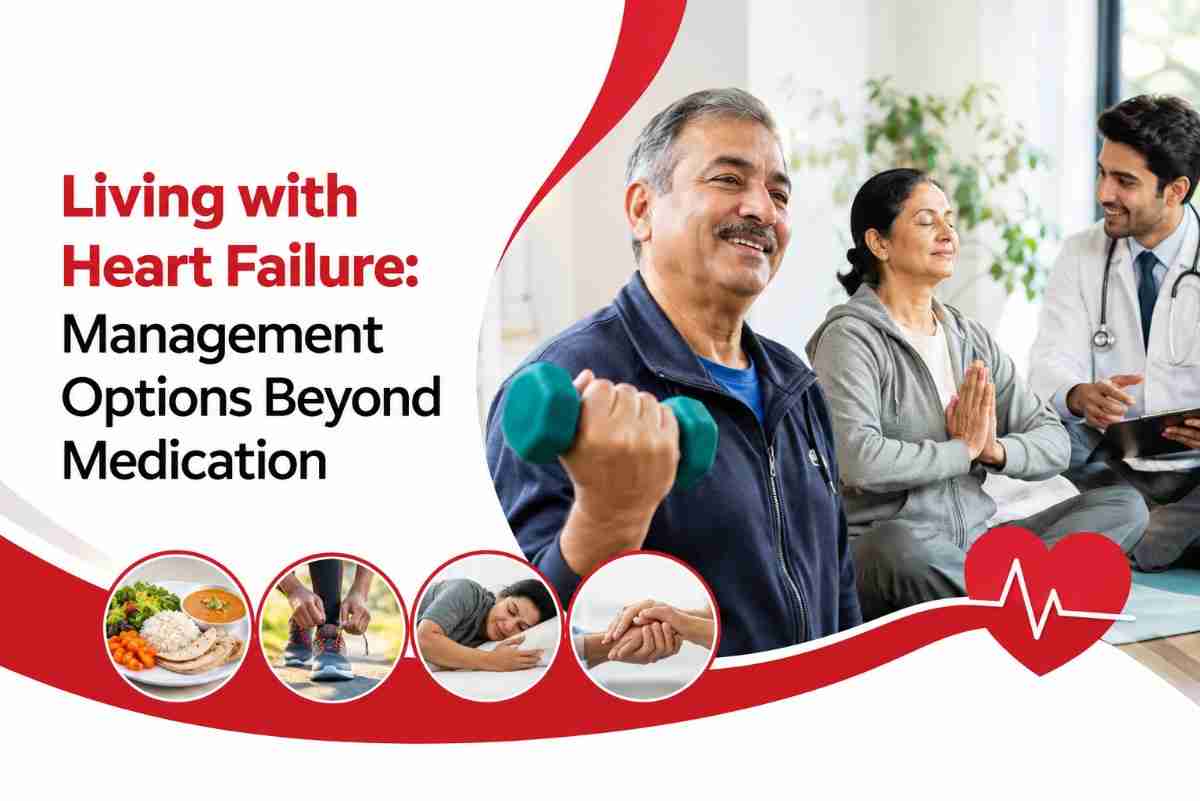
Living with Heart Failure: Management Options Beyond Medication
What Is Heart Failure?
Heart failure is a condition in which the heart muscle doesn’t pump blood as efficiently as the body requires. The name can be misleading — it doesn’t mean the heart has stopped working, but rather that it’s working less effectively than it should, often due to weakened muscle, reduced flexibility, or structural changes.
Featured Snippet Answer — What is heart failure? Heart failure is a chronic condition in which the heart muscle is unable to pump blood efficiently enough to meet the body’s needs, leading to symptoms like breathlessness, fatigue, and fluid retention.
There are different types of heart failure — including reduced ejection fraction (where the heart doesn’t contract strongly enough) and preserved ejection fraction (where the heart contracts normally but doesn’t relax and fill properly) — and the specific type affects how it’s managed.
Causes of Heart Failure
Heart failure usually develops as a result of another underlying heart condition that has affected the heart’s structure or function over time:
- Coronary artery disease – reduced blood flow to the heart muscle, often from a prior heart attack, weakening the heart over time
- High blood pressure – long-term strain forces the heart to work harder, eventually thickening or weakening the muscle
- Heart valve disease – abnormal valve function can force the heart to work inefficiently
- Cardiomyopathy – diseases of the heart muscle itself, sometimes genetic, sometimes due to other causes
- Arrhythmias – prolonged abnormal heart rhythms can impair pumping efficiency
- Diabetes – associated with structural and functional changes in the heart over time
- Other conditions – including certain infections, thyroid disorders, and long-term alcohol use
In many patients, more than one of these factors contributes together, which is why a thorough cardiac history is such an important part of management.
Symptoms to Watch For
Heart failure symptoms often develop gradually, which can make them easy to attribute to aging or general tiredness at first:
- Breathlessness, especially during activity or when lying flat
- Persistent fatigue and reduced ability to exercise
- Swelling in the legs, ankles, or abdomen
- Rapid or unexplained weight gain from fluid retention
- Persistent cough, sometimes with white or pink-tinged mucus
- Increased heart rate or a fluttering sensation
- Difficulty concentrating or reduced alertness
Recognising these symptoms early — and not dismissing them as “just getting older” — often leads to earlier diagnosis and more effective long-term management.
Risk Factors for Heart Failure
Certain individuals face a higher likelihood of developing heart failure over time:
- History of heart attack or coronary artery disease
- Long-standing high blood pressure
- Diabetes
- Heart valve disorders
- Obesity
- Chronic kidney disease
- Excessive alcohol use
- Family history of cardiomyopathy or heart failure
- Older age
If several of these apply to you, discussing a preventive cardiac evaluation with your doctor — even without current symptoms — is a reasonable and proactive step.
How Is Heart Failure Diagnosed?
Diagnosing heart failure, and determining its type and severity, typically involves several tools used together:
- Physical examination – checking for fluid retention, abnormal heart sounds, and breathing patterns
- Blood tests – including BNP or NT-proBNP, markers that rise when the heart is under strain
- Echocardiogram – the key test for assessing how well the heart is pumping and whether structural abnormalities are present
- ECG – evaluates heart rhythm and electrical activity
- Chest X-ray – can reveal fluid in the lungs or an enlarged heart
- Additional testing – such as cardiac MRI or coronary angiography, when the underlying cause needs further clarification
An accurate diagnosis, including identifying the specific type of heart failure, is essential because it directly shapes which management options are most appropriate — something only a qualified cardiologist can determine through proper evaluation.
Heart Failure Management Options
Managing heart failure well typically involves several approaches working together, rather than any single treatment on its own.
Management Option | General Purpose | Typically Considered When |
Lifestyle modification | Reduce cardiac workload, manage fluid balance | Always, as a foundation of care |
Medications | Improve heart function, manage fluid, reduce workload | Based on heart failure type and severity |
Cardiac rehabilitation | Structured, supervised exercise and support | After diagnosis or hospitalisation |
EECP | Improve blood flow non-surgically | Persistent symptoms despite optimal medical therapy |
Angioplasty | Address underlying coronary blockages | Coronary artery disease contributing to heart failure |
Bypass surgery | Surgical correction of coronary blood flow | Complex coronary disease affecting heart function |
Device-based therapy | Support heart rhythm or function | Specific structural or rhythm-related indications |
Lifestyle Modifications
Reducing salt intake, monitoring daily weight, managing fluid intake as advised, and engaging in appropriate physical activity all play a meaningful role in day-to-day heart failure management.
Medications
Heart failure medications generally aim to reduce the heart’s workload, help the body manage fluid, and, in some cases, directly improve heart muscle function. The specific medications and dosages are determined individually by your cardiologist and should never be adjusted or stopped without medical guidance, even if you’re feeling better.
Cardiac Rehabilitation
A structured, supervised program combining exercise training, education, and psychological support, cardiac rehabilitation has become an increasingly recognised part of comprehensive heart failure management, helping many patients improve their functional capacity and quality of life.
EECP (Enhanced External Counterpulsation)
EECP is a non-surgical, FDA-approved therapy using rhythmic cuff compression on the legs, synchronised with the heartbeat, designed to improve blood flow and reduce the workload on the heart. For heart failure patients exploring management without surgery, particularly those with persistent symptoms despite optimised medical therapy, EECP may be a treatment worth discussing. It works alongside — not instead of — prescribed medications and other core treatments, and its suitability depends entirely on individual assessment.
Angioplasty and Bypass Surgery
When heart failure is caused or worsened by underlying coronary artery blockages, procedures like angioplasty or bypass surgery may be recommended to restore blood flow and support heart muscle function, depending on the extent and pattern of disease.
Device-Based Therapy
In certain cases, devices such as pacemakers or specialised heart failure devices may be recommended to support heart rhythm or coordinate the heart’s pumping function — this is determined based on specific structural or rhythm-related findings.
No single option here works in isolation for most patients, and no one approach is universally superior. Effective heart failure management is typically built from a personalised combination, guided by ongoing evaluation from your cardiology team.
When Might EECP Be Considered?
EECP may be worth discussing with your cardiologist if you:
- Continue to experience breathlessness, fatigue, or reduced exercise capacity despite optimised heart failure medication
- Have persistent angina alongside heart failure symptoms
- Are not an ideal candidate for angioplasty or bypass surgery due to other health factors
- Are looking for heart failure management without surgery as a complement to your existing treatment plan
It’s important to be clear: EECP is not suitable for every heart failure patient, and certain conditions can make it inappropriate. A cardiologist can determine candidacy only after reviewing your full cardiac history, current heart function, and existing treatment plan.
Benefits of Early Medical Evaluation
Whether you’re newly experiencing symptoms or already managing heart failure, timely evaluation and follow-up offer real value:
- Catching changes in heart function before they lead to hospitalisation
- Allowing medication and treatment plans to be adjusted proactively
- Identifying whether additional options like cardiac rehabilitation or EECP could be beneficial
- Providing reassurance and clarity as your condition is actively monitored over time
Heart failure is a condition best managed through an ongoing relationship with your care team, not a one-time diagnosis followed by silence.
Lifestyle Tips for Living with Heart Failure
- Monitor your weight daily – sudden gains can signal fluid retention that needs prompt attention
- Follow your prescribed fluid and salt guidance – as advised specifically by your cardiologist
- Stay as active as your doctor recommends – appropriate activity, rather than complete rest, generally supports better outcomes
- Take medications exactly as prescribed – never stop or adjust heart failure medication without consulting your doctor, even if symptoms improve
- Get vaccinated as recommended – respiratory infections can significantly worsen heart failure symptoms
- Prioritise sleep and manage stress – both affect cardiovascular health meaningfully
- Keep all follow-up appointments – heart failure management often requires periodic adjustments based on how you’re responding
Frequently Asked Questions
1. Can EECP help heart failure patients?
EECP may be considered for certain heart failure patients with persistent symptoms despite optimal medical therapy, but suitability depends on individual evaluation by a cardiologist.
2. What are heart failure treatment options besides medication?
Beyond medication, management often includes lifestyle changes, cardiac rehabilitation, and in select cases, non-surgical therapies like EECP or procedures addressing an underlying cause such as coronary artery disease.
3. Can coronary artery disease be reversed?
No, a heart attack is a sudden blockage of blood flow to part of the heart, while heart failure is a chronic condition where the heart doesn’t pump efficiently — though a heart attack can be one of several causes of heart failure over time.
4. Can heart failure be managed without surgery?
Yes, many patients manage heart failure effectively through medication, lifestyle changes, and rehabilitation without surgical intervention; surgical or procedural options are considered based on the specific underlying cause and severity.
5. How important is lifestyle change compared to medication for heart failure?
Both are important and typically work together — lifestyle changes support the effectiveness of medication and can meaningfully improve symptoms and quality of life, but they don’t replace prescribed treatment.
When Should You Consult a Cardiologist?
Consider scheduling or returning for a cardiology consultation if you notice:
- New or worsening breathlessness, fatigue, or reduced ability to carry out daily activities
- Increasing leg or abdominal swelling
- Rapid weight gain over a few days
- Symptoms that persist or worsen despite following your current treatment plan
Seek emergency medical care immediately if you experience severe breathlessness at rest, chest pain, confusion, or fainting — these require urgent evaluation and should never wait for a scheduled appointment.
Why Choose KGK Hospital?
KGK Hospital, located on Poonamallee High Road in Arumbakkam, Chennai, is a specialised cardiac care center focused on comprehensive, non-surgical management of heart failure and related cardiac conditions.
The hospital’s approach includes:
- A dedicated focus on non-surgical heart care, including EECP therapy for eligible heart failure patients with persistent symptoms
- Individualized cardiology assessment led by Dr. Krishnaraja, ensuring each management plan reflects the patient’s specific heart failure type and overall health
- A patient-first consultation approach, encouraging ongoing dialogue about how treatment is working and what adjustments may help
- Accessibility for patients from Anna Nagar, Koyambedu, Mogappair, Vadapalani, Nungambakkam, and across Chennai seeking heart failure treatment options in Chennai
- Evaluation-based treatment planning, ensuring recommendations, including for EECP, are based on thorough individual assessment rather than a standard protocol for every patient
KGK Hospital’s approach recognises that living with heart failure is an ongoing journey, and management works best when it’s built around ongoing communication between patient and cardiologist rather than a single treatment decision made once.
Conclusion
Heart failure management is rarely just about the tablets in your medicine cabinet. It’s a combination of medical treatment, lifestyle adjustments, structured support like cardiac rehabilitation, and — for some patients — additional therapies such as EECP, all working together under the guidance of your cardiology team.
If you’re living with heart failure, or supporting a family member who is, the most valuable next step is an open conversation with a cardiologist about which combination of management options fits your specific situation. Heart failure looks different for every patient, and your care should too.

About Author
At placerat eleifend nulla inceptos per dolor lacinia posuere. Rhoncus sociosqu dolor pharetra torquent interdum curabitur erat pellentesque.
Share Post :
Recent Posts
-
 Exercise After a Heart Diagnosis: What Is Safe and What Isn't
 -
 Heart-Healthy Diet Tips for Preventing Coronary Artery Disease
 -
 Cholesterol and Heart Health: What Your Numbers Really Mean
 -
 High Blood Pressure and Heart Disease: Understanding the Risk
 -
 Diabetes and Heart Disease: Why Early Prevention Matters
Categories
- What is EECP? (Educational)
- EECP vs Surgery (Comparison)
- Heart Health Tips Diabetes & Heart Care
- Patient Stories
- EECP in Tamil (தமிழில் EECP)
- Doctor Articles & Expert Advice
Subscribe Newsletter
Signup our newsletter to get update information, news, insight or promotions.
