
Understanding Coronary Artery Disease: Causes, Symptoms and Treatment Options
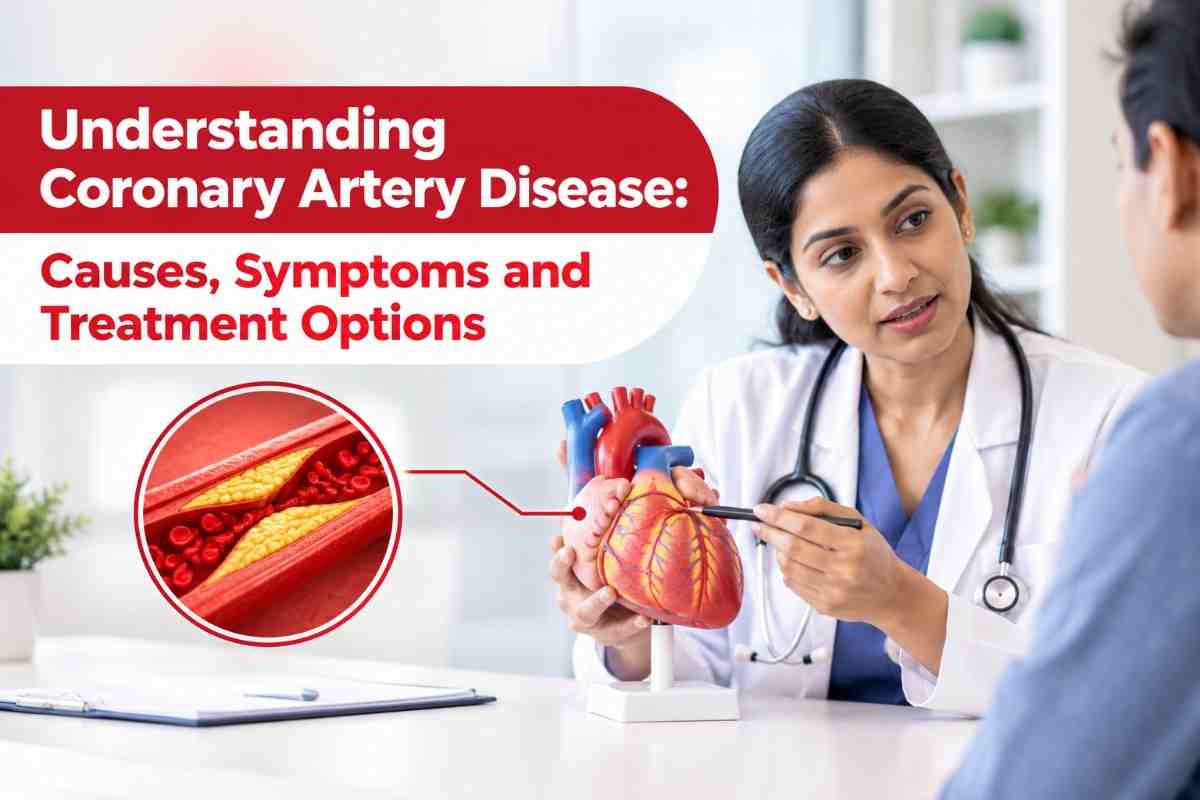
What Is Coronary Artery Disease?
Coronary artery disease is a condition in which the coronary arteries — the blood vessels responsible for supplying oxygen-rich blood to the heart muscle — become narrowed or blocked, most commonly due to a buildup of fatty deposits called plaque. This process is known as atherosclerosis.
Featured Snippet Answer — What is coronary artery disease? Coronary artery disease is a condition where plaque buildup narrows or blocks the arteries supplying blood to the heart, reducing oxygen delivery to the heart muscle and increasing the risk of chest pain, heart attack, and other cardiac complications.
As plaque accumulates, it can restrict blood flow, causing symptoms like chest pain during exertion. If a plaque ruptures and a blood clot forms on top of it, blood flow can be suddenly and severely blocked — this is what causes a heart attack.
Causes of Coronary Artery Disease
CAD develops gradually, often over many years, as a result of several contributing processes:
- Plaque buildup (atherosclerosis) – cholesterol, fat, and other substances accumulate along artery walls
- Chronic inflammation – ongoing low-grade inflammation in blood vessels contributes to plaque formation and instability
- Endothelial damage – injury to the inner lining of arteries, often from high blood pressure, smoking, or high blood sugar, which makes it easier for plaque to form
- Blood clot formation – can develop on top of existing plaque, suddenly restricting or blocking blood flow
What causes coronary artery disease ultimately comes down to a combination of genetic predisposition and long-term lifestyle and metabolic factors — which is why prevention and risk factor management play such a central role in cardiology.
Symptoms of CAD
CAD symptoms can vary significantly from person to person, and in some cases, there are no symptoms at all until a more serious event occurs.
Common CAD symptoms include:
- Chest pain or discomfort (angina), often described as pressure, tightness, or squeezing
- Pain that may spread to the arm, jaw, neck, or back
- Shortness of breath, particularly during physical activity
- Fatigue that seems disproportionate to activity level
- Palpitations or an irregular heartbeat sensation
- Dizziness or lightheadedness in some cases
Symptoms often appear or worsen during physical exertion or emotional stress, when the heart’s oxygen demand increases, and may ease with rest. This pattern — chest discomfort triggered by exertion and relieved by rest — is a hallmark feature doctors look for when evaluating possible CAD.
Risk Factors for Coronary Artery Disease
Some risk factors can be modified through lifestyle and medical management, while others cannot be changed.
Modifiable risk factors:
- High blood pressure
- High LDL (“bad”) cholesterol and low HDL (“good”) cholesterol
- Diabetes or insulin resistance
- Smoking or tobacco use
- Obesity
- Sedentary lifestyle
- Chronic stress
- Poor diet high in saturated fats and processed foods
Non-modifiable risk factors:
- Age (risk increases with age)
- Family history of early heart disease
- Gender (men tend to develop CAD earlier, though risk in women rises significantly after menopause)
Understanding which risk factors apply to you is one of the most useful starting points for a conversation with your cardiologist about prevention or management.
How Is CAD Diagnosed?
Diagnosing coronary artery disease usually involves a stepwise evaluation, starting with less invasive tests and progressing further if needed:
- Medical history and physical examination – reviewing symptoms, risk factors, and family history
- Electrocardiogram (ECG) – detects abnormal electrical patterns that may suggest reduced blood flow
- Blood tests – checking cholesterol levels, blood sugar, and cardiac biomarkers
- Stress testing – evaluates how the heart performs under physical or pharmacological stress
- Echocardiogram – assesses heart muscle function and structure
- Coronary angiography or CT angiography – provides direct visualisation of the coronary arteries to identify blockages and their severity
It’s worth emphasising: a definitive CAD diagnosis, and understanding its severity, requires a qualified cardiologist’s evaluation using these tools together — no single test provides the full picture on its own.
Treatment Options for Coronary Artery Disease
Treatment for CAD is highly individualised, based on the extent of blockages, symptoms, and overall health. Here’s a fair overview of the main approaches used today.
Treatment Option | General Purpose | Typically Considered When |
Lifestyle modification | Slow disease progression, reduce risk | Always, regardless of severity |
Medications | Manage cholesterol, blood pressure, clotting risk | Based on individual risk profile |
EECP | Improve blood flow non-surgically | Persistent angina, not ideal for invasive procedures |
Angioplasty | Mechanically open blocked arteries | Significant blockage needing prompt correction |
Bypass surgery | Reroute blood flow surgically | Complex or multi-vessel disease |
Cardiac rehabilitation | Structured recovery and long-term risk reduction | After a cardiac event or procedure |
Lifestyle Modifications
Often the foundation of CAD management regardless of severity — dietary changes, regular physical activity, smoking cessation, and stress management all contribute to slowing disease progression.
Medications
Commonly used categories include cholesterol-lowering medications (statins), blood pressure medications, blood-thinning agents, and medications that reduce the heart’s oxygen demand. The specific combination is determined by your cardiologist based on your individual risk profile and test results.
EECP (Enhanced External Counterpulsation)
EECP is a non-surgical, FDA-approved therapy that uses cuffs on the legs, synchronised with the heartbeat, to help improve blood flow to the heart. For patients seeking coronary artery disease non-surgical treatment, particularly those with persistent angina despite medication, or who aren’t ideal candidates for angioplasty or bypass, EECP may be a reasonable option to discuss. It is not a replacement for interventions that are clinically indicated for more severe blockages — its suitability always depends on individual evaluation.
Angioplasty
A catheter-based procedure, often involving a stent, used to open significantly narrowed or blocked coronary arteries. This is typically considered when a specific blockage needs mechanical correction.
Bypass Surgery (CABG)
Reserved for more extensive or complex coronary artery disease, particularly involving multiple vessels, where surgical rerouting of blood flow offers the most appropriate long-term management.
Cardiac Rehabilitation
A structured, medically supervised program of exercise, education, and support that helps patients recover after a cardiac event or procedure and reduces the risk of future complications.
No single treatment among these is universally better than another. The appropriate path depends on the pattern and severity of your coronary artery disease, your symptoms, and your overall health — all of which require assessment by a qualified cardiologist.
When Might EECP Be Considered?
EECP is generally worth discussing with your cardiologist if you:
- Continue to experience angina despite being on optimal medical therapy
- Are not a suitable candidate for angioplasty or bypass surgery due to other health factors
- Have diffuse coronary artery disease that isn’t well-suited to a single mechanical intervention
- Are interested in exploring CAD treatment without surgery as part of a broader treatment plan
EECP is not suitable for every patient — certain heart conditions and health factors can rule it out. Whether it’s an appropriate option for you can only be determined through a thorough evaluation by a cardiologist, taking into account your full cardiac history and current treatment.
Benefits of Early Medical Evaluation
Getting evaluated for CAD early — even before symptoms become severe — offers real advantages:
- Identifying disease at an earlier, often more manageable stage
- Preserving a wider range of treatment options
- Allowing risk factors like cholesterol and blood pressure to be addressed before they cause further arterial damage
- Providing a clear picture to guide decisions, rather than acting on uncertainty
Early evaluation isn’t about assuming the worst — it’s about giving yourself the best possible starting point for managing your heart health.
Lifestyle Tips for Better Heart Health
- Adopt a heart-healthy diet – emphasise vegetables, whole grains, lean proteins, and healthy fats, while limiting saturated fats, salt, and processed foods
- Stay physically active – regular, moderate exercise suited to your fitness level supports cardiovascular health
- Quit smoking – one of the most impactful changes for reducing CAD risk and progression
- Manage blood pressure and blood sugar – through medication adherence and lifestyle changes as advised by your doctor
- Maintain a healthy weight – reduces overall cardiovascular strain
- Manage stress – chronic stress has measurable effects on cardiovascular health over time
- Get regular checkups – particularly important if you have risk factors like diabetes, hypertension, or a family history of heart disease
Frequently Asked Questions
1. What causes coronary artery disease?
CAD is primarily caused by plaque buildup (atherosclerosis) in the coronary arteries, driven by factors like high cholesterol, high blood pressure, smoking, diabetes, and chronic inflammation.
2. What are the earliest symptoms of coronary artery disease?
Early symptoms can include mild chest discomfort during exertion, breathlessness, and fatigue, though some people have no symptoms until the disease is more advanced.
3. Can coronary artery disease be reversed?
CAD progression can often be slowed, and symptoms improved, through lifestyle changes and medical treatment, but existing plaque and artery narrowing generally cannot be fully reversed without medical intervention.
4. Is EECP an alternative to angioplasty or bypass surgery?
EECP is a different, non-surgical approach that may be suitable for select patients, but it isn’t a direct substitute for angioplasty or bypass surgery when those procedures are clinically indicated. A cardiologist can advise on the most appropriate option for your specific case.
5. How long does coronary artery disease treatment take to show results?
This varies significantly based on the treatment approach and individual response; your cardiologist can provide a more specific timeline based on your treatment plan.
6. Can lifestyle changes alone treat coronary artery disease?
Lifestyle changes are a critical part of managing CAD and can meaningfully slow disease progression, but many patients also require medication or procedural treatment depending on the severity of their condition.
When Should You Consult a Cardiologist?
Consider scheduling a cardiology consultation if you experience:
- Chest discomfort, pressure, or tightness, especially during physical activity
- Unexplained breathlessness or fatigue that limits your usual activities
- Known risk factors such as diabetes, high blood pressure, high cholesterol, or a family history of heart disease, even without symptoms
Seek emergency medical care immediately if you experience sudden, severe chest pain, pain spreading to the arm or jaw, severe breathlessness, cold sweats, or fainting — these require urgent evaluation and should never wait for a scheduled appointment.
Why Choose KGK Hospital?
KGK Hospital, located on Poonamallee High Road in Arumbakkam, Chennai, is a specialised cardiac care center focused on the evaluation and non-surgical management of coronary artery disease and related heart conditions.
The hospital’s approach includes:
- A dedicated focus on non-surgical heart care, including EECP therapy for eligible patients with coronary artery disease and persistent angina
- Individualised cardiology assessment led by Dr. Krishnaraja, ensuring each treatment recommendation is based on a thorough evaluation of the patient’s specific condition
- A patient-first consultation approach, taking the time to explain diagnosis and treatment options in clear, accessible language
- Accessibility for patients from Anna Nagar, Koyambedu, Mogappair, Vadapalani, Nungambakkam, and across Chennai seeking heart care in Arumbakkam
- Transparent, evaluation-based treatment planning, rather than promoting any single treatment as suitable for all patients
KGK Hospital’s approach centres on helping patients understand their coronary artery disease clearly, so that decisions about lifestyle changes, medication, or procedures like EECP are made with confidence and proper medical guidance.
Conclusion
Coronary artery disease is common, well-understood by modern cardiology, and — importantly — manageable in the vast majority of cases when addressed appropriately. Whether your path forward involves lifestyle changes, medication, EECP, or a more invasive procedure depends entirely on your individual disease pattern and health profile, and that’s a decision best made together with a cardiologist who knows your full picture.
If you’ve been diagnosed with CAD, or are concerned about symptoms or risk factors, consider scheduling a consultation to discuss your specific situation and treatment options. Understanding your heart health clearly is the first step toward managing it well — and that conversation is worth having today.

About Author
At placerat eleifend nulla inceptos per dolor lacinia posuere. Rhoncus sociosqu dolor pharetra torquent interdum curabitur erat pellentesque.
Share Post :
Recent Posts
-
 Exercise After a Heart Diagnosis: What Is Safe and What Isn't
 -
 Heart-Healthy Diet Tips for Preventing Coronary Artery Disease
 -
 Cholesterol and Heart Health: What Your Numbers Really Mean
 -
 High Blood Pressure and Heart Disease: Understanding the Risk
 -
 Diabetes and Heart Disease: Why Early Prevention Matters
Categories
- What is EECP? (Educational)
- EECP vs Surgery (Comparison)
- Heart Health Tips Diabetes & Heart Care
- Patient Stories
- EECP in Tamil (தமிழில் EECP)
- Doctor Articles & Expert Advice
Subscribe Newsletter
Signup our newsletter to get update information, news, insight or promotions.
