
Leg Swelling and Heart Failure: Is There a Link?
What Is Leg Swelling (Edema)?
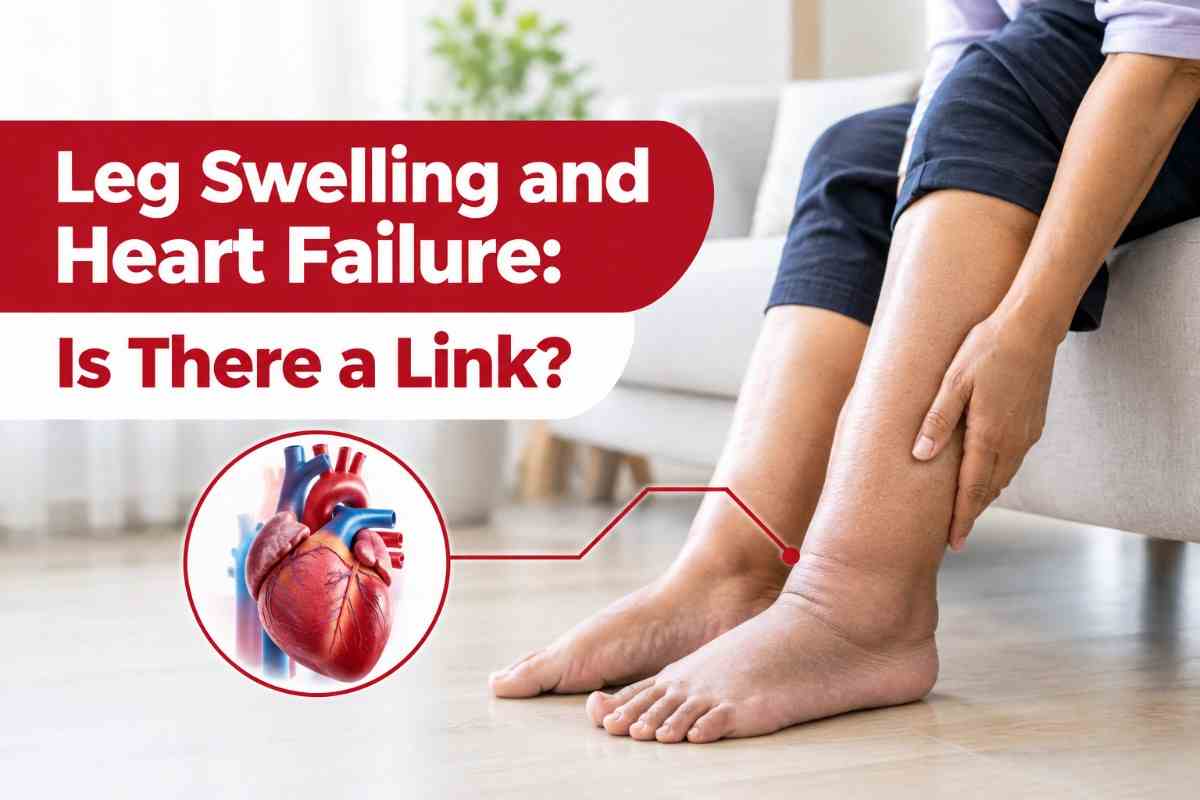
Leg swelling, medically called peripheral edema, happens when excess fluid accumulates in the tissues of the legs, ankles, or feet. It can affect one leg or both, and can range from mild puffiness to noticeable, pitting swelling — where pressing a finger into the skin leaves a temporary indent.
Featured Snippet Answer — Why do my legs swell with heart failure? In heart failure, the heart doesn’t pump blood as efficiently as it should. This causes blood to back up in the veins, increasing pressure that pushes fluid out of blood vessels and into surrounding tissue, most noticeably in the lower legs due to gravity.
Edema itself isn’t a diagnosis — it’s a symptom, and figuring out its cause is the key step in deciding what, if anything, needs to be done about it.
How Leg Swelling Connects to Heart Failure
Heart failure doesn’t mean the heart has stopped working — it means the heart muscle isn’t pumping blood as effectively as the body needs. When the heart can’t keep up, blood can back up in the veins leading to the heart, particularly affecting the lower body due to gravity.
This backup increases pressure in the veins of the legs, pushing fluid out of the blood vessels and into the surrounding tissue — resulting in the swelling many patients notice first in their ankles and later, if untreated, higher up the legs.
Right-sided heart failure, in particular, is commonly associated with this pattern of leg and ankle swelling, since the right side of the heart is responsible for receiving blood returning from the body before sending it to the lungs.
Other Common Causes of Leg Swelling
It’s worth emphasising: leg swelling is common, and heart failure is only one of many possible explanations. Other frequent causes include:
- Prolonged standing or sitting – especially during travel or long work shifts
- Venous insufficiency – weakened vein valves that make it harder for blood to return to the heart
- Kidney-related conditions – affecting the body’s fluid and sodium balance
- Liver conditions – which can affect protein levels that help keep fluid in blood vessels
- Certain medications – including some blood pressure medications and anti-inflammatory drugs
- Pregnancy – increased blood volume and pressure on pelvic veins
- Injury or infection – localised swelling from a sprain, infection, or blood clot in the leg
This is exactly why self-diagnosis based on swelling alone isn’t reliable — the same symptom can point to very different underlying conditions, each requiring a different approach.
Symptoms That Point Toward a Heart-Related Cause
While swelling alone doesn’t confirm a cardiac cause, certain accompanying symptoms raise the likelihood that the heart is involved:
- Shortness of breath, especially when lying flat or during mild activity
- Unusual fatigue or reduced ability to exercise
- Rapid weight gain over a few days, often due to fluid retention
- Swelling that worsens throughout the day and is present in both legs
- A persistent cough, sometimes with frothy or blood-tinged mucus
- Increased need to urinate at night
- A feeling of fullness or bloating in the abdomen
Leg swelling and shortness of breath together is a combination that deserves prompt medical attention, as it can indicate the heart or lungs are struggling to manage fluid balance effectively.
Risk Factors for Heart-Related Leg Swelling
Certain individuals are more likely to develop heart failure-related leg swelling:
- History of heart attack – prior heart muscle damage can weaken pumping function over time
- High blood pressure – long-term strain on the heart muscle
- Diabetes – associated with higher rates of heart failure
- Coronary artery disease – reduced blood flow to the heart muscle over time
- Heart valve conditions – can affect how efficiently blood moves through the heart
- Obesity – added strain on cardiovascular function
- Older age – heart failure risk increases with age
- Chronic kidney disease – closely linked with fluid balance and cardiovascular health
If you fall into one or more of these categories and are noticing new or worsening leg swelling, it’s worth discussing this specifically with your doctor rather than assuming it’s unrelated.
How Is It Diagnosed?
Determining whether leg swelling is heart-related — or due to another cause entirely — typically involves a combination of the following:
- Physical examination – checking the pattern, location, and characteristics of the swelling, along with listening to the heart and lungs
- Blood tests – including a marker called BNP (B-type natriuretic peptide), which tends to rise when the heart is under strain
- Echocardiogram – provides a detailed look at how well the heart is pumping and whether valve function is normal
- Chest X-ray – can reveal fluid in or around the lungs, which often accompanies heart-related swelling
- ECG – checks for underlying heart rhythm or structural issues
- Additional tests – such as kidney function tests or vein studies, when a non-cardiac cause is suspected
A proper diagnosis requires this kind of structured medical evaluation — swelling alone, however concerning it looks, isn’t enough information to determine the cause on its own.
Treatment Options
Once the cause of leg swelling is identified, treatment is tailored to the underlying condition. When heart failure is the cause, management typically involves a combination of approaches.
Treatment Option | General Purpose | Typically Considered When |
Lifestyle modification | Reduce fluid retention and cardiac workload | Always, as a foundation of care |
Medications (e.g., diuretics) | Help the body eliminate excess fluid | Confirmed fluid overload from heart failure |
EECP | Improve blood flow non-surgically | Select heart failure or angina cases, per evaluation |
Angioplasty | Open blocked coronary arteries | Underlying coronary artery disease contributing to heart failure |
Bypass surgery | Reroute blood flow surgically | Complex coronary artery disease affecting heart function |
Cardiac rehabilitation | Structured recovery and conditioning | After diagnosis, to support long-term heart health |
Lifestyle Modifications
Reducing salt intake, monitoring daily weight for sudden fluid gain, and following an activity plan appropriate to your condition are often first-line strategies.
Medications
Diuretics (sometimes called “water pills”) are commonly used to help the body eliminate excess fluid, alongside other heart failure medications aimed at reducing the heart’s workload and improving its pumping efficiency. The exact medication plan depends entirely on individual diagnosis and is determined by your treating cardiologist.
EECP (Enhanced External Counterpulsation)
A non-surgical, FDA-approved therapy that uses cuffs on the legs, synchronised with the heartbeat, to improve circulation and reduce the heart’s workload. It may be considered for certain patients with heart failure or ongoing angina symptoms, though suitability depends on individual cardiac assessment.
Angioplasty
Used when underlying coronary artery blockages are contributing to reduced heart function, this catheter-based procedure helps restore blood flow to the heart muscle.
Bypass Surgery (CABG)
Considered for more extensive coronary artery disease that is significantly affecting heart function, particularly when multiple vessels are involved.
Cardiac Rehabilitation
A supervised program combining exercise, education, and monitoring that supports long-term heart function and helps patients safely rebuild activity tolerance.
No treatment listed here is a universal solution. The right combination depends on what’s actually causing the heart’s reduced function and how your body responds — something only a proper cardiac evaluation can determine.
When Might EECP Be Considered?
EECP may be worth discussing with your cardiologist if you:
- Have heart failure or angina symptoms that persist despite optimised medical therapy
- Are not an ideal candidate for angioplasty or bypass surgery due to other health factors
- Are looking for a non-invasive option to potentially support circulation alongside your existing treatment plan
EECP isn’t appropriate for everyone — certain heart conditions and other health factors can make it unsuitable. Determining candidacy requires a full evaluation by a cardiologist, including a review of your heart function and current symptoms.
Benefits of Early Medical Evaluation
Addressing leg swelling early, rather than waiting to see if it resolves on its own, offers meaningful benefits:
- Identifying heart failure or other cardiac conditions before they progress further
- Preventing complications associated with prolonged fluid overload
- Allowing more treatment flexibility, since earlier intervention often means more manageable disease
- Providing clarity — many cases of leg swelling turn out to be unrelated to the heart, and ruling that in or out brings genuine peace of mind
Lifestyle Tips for Better Heart Health
- Monitor your weight – sudden weight gain over a few days can signal fluid retention worth reporting to your doctor
- Reduce salt intake – excess sodium contributes to fluid retention
- Stay appropriately active – as guided by your doctor, particularly if you have diagnosed heart failure
- Elevate your legs periodically – can help reduce mild, non-cardiac swelling from prolonged sitting or standing
- Track your symptoms – note patterns in swelling, breathlessness, or fatigue to share with your doctor
- Take medications as prescribed – particularly diuretics or heart failure medications, without adjusting doses independently
- Attend regular follow-ups – especially important for anyone with an existing heart condition
Frequently Asked Questions
1. Why do my legs swell with heart failure?
When the heart doesn’t pump efficiently, blood can back up in the veins, increasing pressure that pushes fluid into the surrounding tissue, most noticeably in the legs due to gravity.
2. Is leg swelling always a sign of heart failure?
No, leg swelling has many possible causes, including prolonged standing, venous issues, kidney or liver conditions, and certain medications. Heart failure is one possible cause among several.
3. When is leg swelling and shortness of breath a heart issue?
The combination of leg swelling with breathlessness, especially when lying flat or during mild activity, raises the likelihood of a cardiac cause and should be evaluated promptly.
4. What does heart failure leg swelling look like?
It often appears as swelling in both legs, typically worse by evening, and may leave a temporary indent when pressed (pitting edema).
5. Can leg swelling from heart failure be reduced?
With appropriate treatment — including medications like diuretics and lifestyle changes such as reduced salt intake — swelling related to heart failure can often be managed, though outcomes vary by individual and underlying cause.
When Should You Consult a Cardiologist?
Consider scheduling a cardiology consultation if you notice:
- New or worsening leg swelling that persists for more than a few days
- Swelling accompanied by breathlessness, fatigue, or rapid weight gain
- A known history of heart attack, high blood pressure, or coronary artery disease along with new swelling
Seek emergency medical care immediately if leg swelling occurs alongside chest pain or pressure, severe shortness of breath, confusion, or fainting — these combinations require urgent evaluation and should not wait for a scheduled appointment.
Why Choose KGK Hospital?
KGK Hospital, located on Poonamallee High Road in Arumbakkam, Chennai, is a specialised cardiac care center focused on evaluating and managing coronary artery disease, heart failure, and related cardiac conditions through both medical management and non-surgical options.
The hospital’s approach includes:
- A dedicated focus on non-surgical heart care, including EECP therapy for eligible patients with heart failure or angina
- Thorough, individualised cardiac evaluation led by Dr. Krishnaraja, ensuring symptoms like leg swelling are properly investigated rather than assumed
- A patient-first consultation approach, taking time to explain findings and treatment options in clear, understandable terms
- Accessibility for patients from Anna Nagar, Koyambedu, Mogappair, Vadapalani, Nungambakkam, and across Chennai
- Evaluation-based treatment planning, ensuring recommendations are matched to each patient’s specific cardiac findings
KGK Hospital’s approach recognises that a symptom like leg swelling can have many explanations, and getting the right answer starts with careful, individualised assessment rather than assumptions.
Conclusion
Leg swelling is one of those symptoms that can mean very little — or quite a lot, depending on what’s behind it. When it shows up alongside breathlessness, fatigue, or rapid weight gain, it’s worth taking seriously and getting evaluated, since heart failure is one of several possible causes that a proper assessment can help rule in or out.
If you’ve been noticing persistent or worsening leg swelling, especially with any of the symptoms discussed here, consider speaking with a cardiologist about your specific situation. Understanding what’s actually happening in your body is the first step toward the right treatment plan — and that clarity is worth seeking sooner rather than later.

About Author
At placerat eleifend nulla inceptos per dolor lacinia posuere. Rhoncus sociosqu dolor pharetra torquent interdum curabitur erat pellentesque.
Share Post :
Recent Posts
-
 Exercise After a Heart Diagnosis: What Is Safe and What Isn't
 -
 Heart-Healthy Diet Tips for Preventing Coronary Artery Disease
 -
 Cholesterol and Heart Health: What Your Numbers Really Mean
 -
 High Blood Pressure and Heart Disease: Understanding the Risk
 -
 Diabetes and Heart Disease: Why Early Prevention Matters
Categories
- What is EECP? (Educational)
- EECP vs Surgery (Comparison)
- Heart Health Tips Diabetes & Heart Care
- Patient Stories
- EECP in Tamil (தமிழில் EECP)
- Doctor Articles & Expert Advice
Subscribe Newsletter
Signup our newsletter to get update information, news, insight or promotions.
