
Breathlessness and Heart Disease: Understanding the Connection
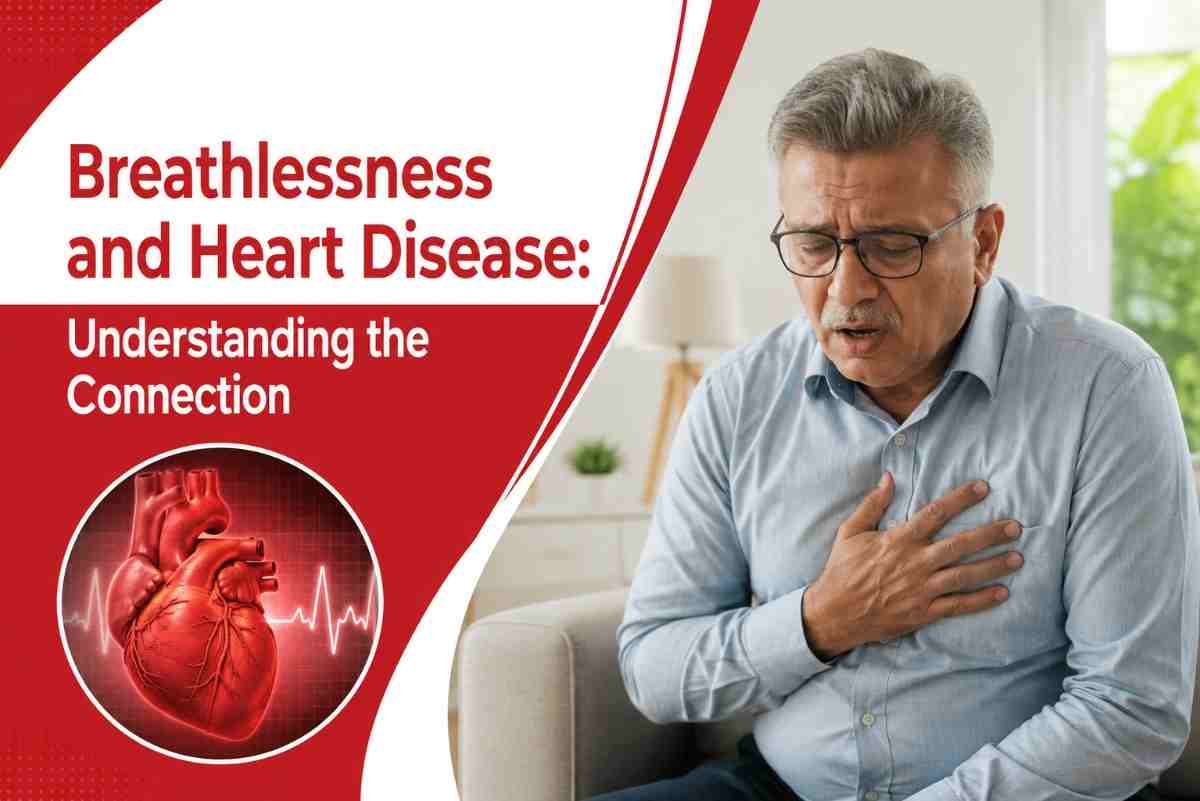
Why Breathlessness Is Often Overlooked
Getting a little out of breath climbing a flight of stairs, walking briskly, or carrying groceries doesn’t sound alarming on its own — it’s easy to attribute to being unfit, carrying extra weight, or simply “not as young as I used to be.” That’s exactly why breathlessness is one of the more commonly overlooked warning signs of heart disease. It builds gradually, it has an easy explanation ready at hand, and it rarely feels urgent in the moment.
But breathlessness that’s new, progressively worsening, or occurring with less effort than it used to is genuinely worth paying attention to, because it’s one of the ways the heart signals that it isn’t keeping up with the body’s demands. This article explains how heart disease causes breathlessness, how to tell it apart from other causes, and when it’s time to see a cardiologist rather than simply adjust your pace.
What Is Breathlessness (Dyspnea)?
Breathlessness, medically referred to as dyspnea, is the sensation of not being able to get enough air, or having to work harder than usual to breathe. It can range from mild — noticing you’re winded a bit sooner than expected — to severe, where even simple tasks like getting dressed leave you gasping for breath.
Breathlessness itself isn’t a diagnosis; it’s a symptom that can arise from the heart, lungs, blood, or even anxiety. What matters clinically is the pattern: when it occurs, how quickly it comes on, what makes it better or worse, and what other symptoms accompany it.
How Heart Disease Causes Breathlessness
Several heart-related mechanisms can lead to breathlessness:
- Reduced pumping efficiency (heart failure) — when the heart muscle can’t pump blood effectively, fluid can back up into the lungs, making breathing harder, particularly with exertion or when lying flat.
- Coronary artery disease and angina — narrowed arteries limiting blood flow to the heart muscle can cause breathlessness alongside or even instead of classic chest pain, especially during exertion.
- Arrhythmias — irregular heart rhythms can reduce the heart’s efficiency at pumping blood, leading to breathlessness, particularly with activity.
- Valve disease — certain valve problems can cause blood to back up into the lungs, producing breathlessness that often worsens gradually over time.
In all of these cases, the underlying issue is the same at a basic level: the heart isn’t moving blood as efficiently as the body needs, and breathlessness is one of the ways this shows up.
Non-Cardiac Causes of Breathlessness
Because breathlessness is such a general symptom, it’s important to know it isn’t always cardiac:
- Lung conditions — such as asthma, COPD, or respiratory infections, which directly affect the ability to move air in and out of the lungs
- Anemia — low red blood cell counts reduce the blood’s oxygen-carrying capacity, causing breathlessness even without any heart or lung problem
- Deconditioning — reduced physical fitness, which can cause breathlessness with exertion that isn’t due to underlying disease
- Obesity — extra weight increases the effort required for breathing and physical activity
- Anxiety and panic — can cause a sensation of breathlessness or air hunger, sometimes with a rapid heart rate, even without a physical cause
Distinguishing between these causes based on symptoms alone isn’t reliable — that’s exactly why breathlessness that’s new, worsening, or accompanied by other symptoms deserves a proper medical evaluation rather than a guess.
Symptoms That Point Toward a Cardiac Cause
Certain patterns and accompanying symptoms make a cardiac cause more likely:
- Breathlessness with exertion that’s new or has been getting progressively worse
- Orthopnea — breathlessness that worsens when lying flat and improves when sitting up, sometimes requiring extra pillows to sleep comfortably
- Paroxysmal nocturnal dyspnea — waking suddenly at night gasping for breath
- Breathlessness accompanied by chest pain, pressure, or tightness
- Swelling in the legs, ankles, or feet, which can indicate fluid retention related to reduced heart function
- Breathlessness accompanied by fatigue, palpitations, or dizziness
The presence of any of these accompanying features, particularly orthopnea or nighttime breathlessness, should prompt a cardiac evaluation rather than being dismissed as general unfitness.
Risk Factors That Raise Concern
Breathlessness is more likely to be heart-related if you also have:
- High blood pressure or high cholesterol
- Diabetes or insulin resistance
- A history of smoking
- A family history of heart disease
- A prior heart attack, heart failure diagnosis, or cardiac procedure
- Obesity or a largely sedentary lifestyle
- Advancing age
If you have any of these risk factors, breathlessness that’s new or worsening deserves prompt evaluation rather than being attributed automatically to fitness or weight.
How Cardiac Breathlessness Is Diagnosed
A cardiologist evaluating breathlessness will typically use a combination of the following, depending on the suspected cause:
- Detailed symptom history — understanding when the breathlessness occurs, what triggers it, and what accompanies it
- Physical examination — checking for signs such as leg swelling, abnormal heart or lung sounds, and other clinical clues
- ECG — assessing the heart’s electrical activity
- Echocardiogram — imaging the heart’s structure and function, often central to evaluating breathlessness, since it can reveal how well the heart is pumping and whether valves are functioning normally
- Stress testing — evaluating how the heart performs under exertion
- Blood tests — including markers that can indicate heart strain, along with checks for anemia and other non-cardiac causes
- Chest X-ray or pulmonary function tests — when a lung-related cause is also being considered
Because breathlessness can stem from the heart, lungs, or blood, a thorough workup, rather than a single test, is often what’s needed to reach an accurate diagnosis.
Treatment Options If Heart Disease Is Confirmed
If breathlessness is found to be related to heart disease, treatment is tailored to the underlying cause and may include:
- Lifestyle modification — physical activity guidance, dietary changes including sodium management where fluid retention is a factor, and smoking cessation
- Medications — such as diuretics, beta-blockers, ACE inhibitors or ARBs, and other heart failure or coronary artery disease medications, depending on the diagnosis
- EECP — a non-invasive therapy considered for chronic stable angina and select cases of heart failure with reduced ejection fraction
- Angioplasty with stenting or bypass surgery — considered when significant coronary blockages are contributing to symptoms
- Cardiac rehabilitation — a structured, supervised program that can help improve exercise tolerance and reduce breathlessness over time
- Treatment of arrhythmias or valve disease, where these are the underlying cause
The specific treatment approach depends entirely on what’s causing the breathlessness — heart failure, coronary artery disease, arrhythmia, or valve disease each require a different management strategy.
When Might EECP Be Considered?
EECP, or Enhanced External Counterpulsation, is a non-invasive, FDA-approved therapy in which cuffs around the calves, lower thighs, and upper thighs inflate and deflate in sequence with the heartbeat, improving blood flow to the heart and encouraging collateral vessel development over the course of treatment.
A cardiologist may discuss EECP as an option when breathlessness is related to:
- Chronic stable angina persisting despite optimal medication, where breathlessness accompanies exertional chest discomfort
- Select cases of heart failure with reduced ejection fraction, as part of a broader treatment plan
- Continued symptoms after previous stenting or bypass surgery
- Situations where a patient is not an ideal candidate for angioplasty or bypass surgery
Whether EECP is appropriate depends on a full cardiac evaluation, including confirmation of the underlying cause of your breathlessness — it is not a treatment for breathlessness in general, but for specific cardiac conditions that a cardiologist identifies.
Benefits of Early Medical Evaluation
Breathlessness tends to progress slowly, which means many people unconsciously adapt around it — taking the elevator instead of the stairs, pausing more often, or simply assuming they need to “get back in shape.” This gradual adaptation can delay recognition of a genuine underlying problem.
Early evaluation interrupts this pattern by giving you a clear answer about what’s actually causing your breathlessness. If it turns out to be cardiac, early treatment can often prevent further progression and preserve a wider range of treatment options. If it isn’t cardiac, that’s valuable reassurance too, and it points you toward the right kind of care for the actual cause.
Lifestyle Tips for Better Heart Health
Whether or not your breathlessness turns out to be heart-related, these habits support cardiovascular and overall health:
- Stay physically active within a level appropriate for your current health, building up gradually rather than pushing through breathlessness
- Follow a heart-healthy diet, including attention to sodium intake if fluid retention is a concern
- Quit smoking and avoid tobacco, since it affects both heart and lung function
- Manage blood pressure, cholesterol, and blood sugar consistently
- Monitor your weight and any swelling in your legs or ankles, and mention noticeable changes to your doctor
- Elevate your head while sleeping if you notice breathlessness lying flat, and discuss this symptom with your cardiologist rather than just adjusting your pillows indefinitely
- Keep track of your symptoms — note what triggers your breathlessness and how it’s changed over time, and bring this to your appointment
Frequently Asked Questions
Why am I breathless climbing stairs when I never used to be?
New or worsening breathlessness with activities that didn’t previously cause it is a pattern worth evaluating, since it can indicate the heart isn’t pumping as efficiently as it should, among other possible causes.
Is breathlessness with chest tightness always a heart problem?
Not always, but breathlessness combined with chest tightness is a combination that specifically raises concern for a cardiac cause and should be evaluated promptly rather than assumed to be anxiety or unfitness.
How can I tell if my breathlessness is from my heart or my lungs?
This distinction usually requires medical evaluation, including tests like an echocardiogram, ECG, and sometimes pulmonary function tests, since the symptoms can overlap significantly.
Why do I feel breathless when I lie down at night?
Breathlessness that worsens lying flat (orthopnea) or that wakes you suddenly at night gasping for air can indicate fluid buildup related to how well your heart is pumping, and should be evaluated by a cardiologist.
Can anxiety cause the same breathlessness as heart disease?
Yes, anxiety can cause a real sensation of breathlessness, sometimes with a racing heart, which can closely resemble cardiac symptoms. A medical evaluation is often needed to distinguish between the two confidently.
When Should You Consult a Cardiologist?
Schedule a cardiology evaluation if you experience:
- Breathlessness that’s new or has been gradually worsening
- Breathlessness with less exertion than it used to take
- Difficulty breathing when lying flat, or waking at night breathless
- Breathlessness accompanied by chest pain, pressure, or tightness
- Swelling in the legs, ankles, or feet alongside breathlessness
- Breathlessness accompanied by fatigue, palpitations, or dizziness
- Known risk factors such as diabetes, high blood pressure, or prior heart disease, even with mild symptoms
If you experience sudden, severe breathlessness, breathlessness with chest pain, sweating, or a bluish tinge to the lips or face, this may be a medical emergency. Seek immediate emergency medical care rather than waiting for a scheduled appointment.
Why Choose KGK Hospital
KGK Hospital in Arumbakkam, Chennai, focuses specifically on EECP therapy and non-invasive cardiac care, under the guidance of Dr. K G Krishnaraja. Because evaluating symptoms like breathlessness and connecting them to their underlying cardiac cause is central to the hospital’s clinical work, the team is well positioned to look beyond the symptom itself and identify what’s actually driving it.
Every evaluation at KGK Hospital begins with a detailed review of when your breathlessness occurs, what accompanies it, and your broader cardiac history, so that any recommendation — whether further testing, lifestyle guidance, medication, or EECP — reflects your actual clinical picture. The hospital is located on Poonamallee High Road, Arumbakkam, accessible from Anna Nagar and surrounding parts of Chennai, making it a practical option for patients in the area seeking evaluation for breathlessness or related symptoms.
Conclusion
Breathlessness is one of those symptoms that’s easy to explain away and genuinely important not to. While it can stem from the lungs, blood, fitness level, or anxiety, it’s also one of the more common ways heart disease first makes itself known — sometimes well before any chest pain appears. Patterns like breathlessness with exertion, difficulty lying flat, or waking at night gasping for air deserve a proper cardiac evaluation, not just a slower pace on the stairs.
If breathlessness has been creeping into your daily activities, the clearest way to understand why is a thorough evaluation, not a guess. Consider speaking with a cardiologist at KGK Hospital, Arumbakkam, Chennai, to find out what’s behind your symptoms and what your options are.

About Author
At placerat eleifend nulla inceptos per dolor lacinia posuere. Rhoncus sociosqu dolor pharetra torquent interdum curabitur erat pellentesque.
Share Post :
Recent Posts
-
 Exercise After a Heart Diagnosis: What Is Safe and What Isn't
 -
 Heart-Healthy Diet Tips for Preventing Coronary Artery Disease
 -
 Cholesterol and Heart Health: What Your Numbers Really Mean
 -
 High Blood Pressure and Heart Disease: Understanding the Risk
 -
 Diabetes and Heart Disease: Why Early Prevention Matters
Categories
- What is EECP? (Educational)
- EECP vs Surgery (Comparison)
- Heart Health Tips Diabetes & Heart Care
- Patient Stories
- EECP in Tamil (தமிழில் EECP)
- Doctor Articles & Expert Advice
Subscribe Newsletter
Signup our newsletter to get update information, news, insight or promotions.
