
EECP vs Bypass Surgery: Understanding When Each Is Appropriate
What Is EECP?
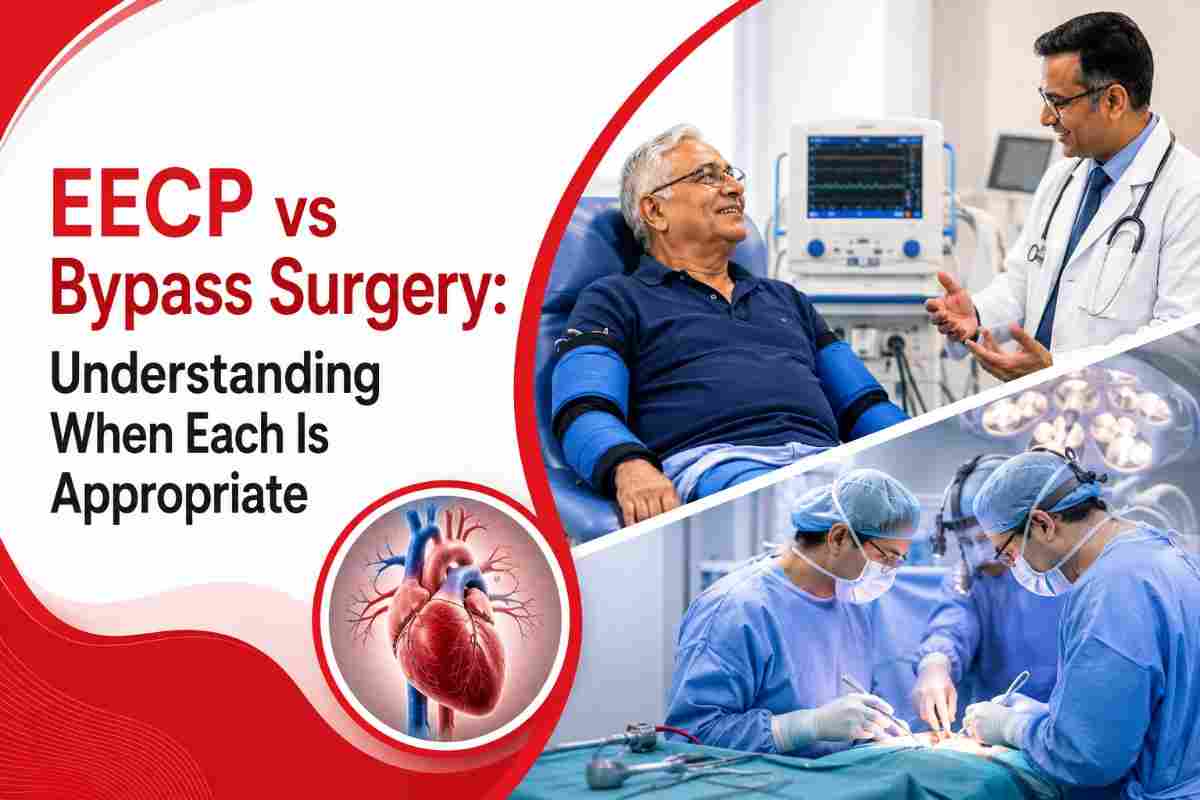
Enhanced External Counterpulsation (EECP) is a non-invasive treatment using inflatable cuffs on the calves, thighs, and lower body that synchronize with your heartbeat to help improve blood flow to the heart over a course of outpatient sessions. It involves no incisions, no anesthesia, and no hospital admission.
What Is Bypass Surgery?
Coronary artery bypass grafting (CABG), commonly called bypass surgery, is a surgical procedure in which a healthy blood vessel from elsewhere in the body is used to create a new pathway around a blocked or severely narrowed coronary artery, restoring blood flow to the heart muscle. It’s a major surgical procedure performed under general anesthesia, typically requiring hospital admission and a structured recovery period.
EECP vs Bypass Surgery: Key Differences
| Factor | EECP | Bypass Surgery |
|---|---|---|
| Invasiveness | Non-invasive, outpatient | Major surgery, invasive |
| Anesthesia | None required | General anesthesia |
| Hospital stay | None | Typically required, often several days |
| Recovery time | Minimal, no formal downtime | Weeks to months |
| Typical candidates | Chronic stable angina, often not candidates for invasive procedures | Significant, complex, or multi-vessel blockages |
| Mechanism | Improves blood flow via external counterpulsation | Creates new blood flow pathway surgically |
| Session/procedure structure | Multiple sessions over weeks | Single surgical procedure |
Why These Treatments Aren't Direct Alternatives
It’s important to understand that EECP and bypass surgery aren’t competing options for the same clinical picture, they address different situations. Bypass surgery directly addresses significant arterial blockages by rerouting blood flow surgically. EECP doesn’t address blockages directly; instead, it supports improved blood flow and symptom relief through a non-invasive mechanism, which is why it’s typically considered for a different patient profile than those requiring bypass surgery.
Who Should Consider Bypass Surgery?
Bypass surgery is generally considered for patients with:
– Significant blockages in multiple coronary arteries
– Blockages in critical locations that carry higher risk if left untreated
– Certain patterns of coronary artery disease where surgical revascularization offers the most direct, evidence-based benefit
– Cases where other less invasive options aren’t appropriate given the extent of disease
This decision is always made through thorough cardiac evaluation, including imaging like angiography, by a cardiology and cardiac surgery team.
Who Might Consider EECP Instead?
EECP is generally considered for patients who:
– Continue to experience angina despite optimized medication
– Aren’t suitable candidates for bypass surgery or angioplasty due to other health factors
– Have already undergone bypass surgery or angioplasty but continue to experience symptoms
– Are seeking a non-invasive option as part of a broader, cardiologist-guided treatment plan
Is EECP Safer Than Bypass Surgery?
This question comes up often, and it deserves a careful answer rather than a simple yes. EECP is non-invasive and generally carries fewer immediate procedural risks than major surgery, since it avoids anesthesia, incisions, and the recovery demands of a surgical procedure. However, “safer” isn’t the same as “equally effective for the same condition.” Bypass surgery is specifically designed to directly address significant arterial blockages in a way that EECP cannot. For a patient who genuinely needs surgical revascularization, choosing EECP instead wouldn’t be a safer choice, it would be choosing a treatment not designed for that clinical situation. Safety and effectiveness should always be considered together, based on your specific diagnosis.
EECP After a Failed or Incomplete Bypass
Some patients who have undergone bypass surgery continue to experience angina symptoms afterward, sometimes referred to as incomplete symptom relief. In these situations, a cardiologist may consider EECP as part of ongoing management, particularly if further surgical or catheter-based intervention isn’t appropriate or hasn’t fully resolved symptoms. This is a decision made through careful, individualized evaluation of your cardiac history and current condition.
Causes and Risk Factors for Coronary Artery Disease
– High blood pressure
– Diabetes
– High cholesterol
– Smoking
– Sedentary lifestyle
– Family history of heart disease
– Obesity
Symptoms Worth Discussing With a Cardiologist
– Chest pain or discomfort, especially with exertion
– Shortness of breath
– Unusual fatigue during activity
– Pain radiating to the arm, jaw, or back
– Palpitations
Diagnosis: How Treatment Decisions Are Made
Determining whether bypass surgery, EECP, or another treatment is appropriate involves clinical evaluation, ECG, stress testing, and imaging such as angiography to assess the extent and location of any blockages. This thorough diagnostic picture is what genuinely guides treatment choice, not a general preference for invasive versus non-invasive options.
Other Treatment Options
– Lifestyle modifications — Foundational for all patients with coronary artery disease
– Medications — Manage blood pressure, cholesterol, and angina symptoms
– Angioplasty — A catheter-based procedure for certain blockage patterns, less invasive than bypass surgery but still an invasive procedure
– Cardiac rehabilitation — Structured, supervised exercise and lifestyle support, often recommended alongside other treatments
Benefits of Early Medical Evaluation
Seeking evaluation early when symptoms appear allows your cardiologist to determine which treatment path, whether EECP, medication, angioplasty, or bypass surgery, genuinely fits your specific coronary artery disease pattern, rather than facing more limited options later.
Lifestyle Tips for Better Heart Health
– Follow a heart-healthy, balanced diet
– Engage in regular, doctor-approved physical activity
– Manage blood pressure, cholesterol, and blood sugar
– Avoid smoking and limit alcohol
– Prioritize sleep and stress management
– Take prescribed medications consistently, never stopping without medical guidance
Frequently Asked Questions
1. Is EECP safer than bypass surgery?
EECP is non-invasive and generally carries fewer procedural risks, but it’s not designed to address the same clinical situations as bypass surgery. “Safer” depends on whether the treatment is appropriate for your specific diagnosis.
2. Who should choose bypass surgery over EECP?
Patients with significant, complex, or multi-vessel coronary blockages, where surgical revascularization offers the most direct benefit, are generally candidates for bypass surgery rather than EECP.
3. Can I have EECP after a failed bypass?
Some patients who continue to experience angina after bypass surgery may be considered for EECP as part of ongoing management, determined through individualized cardiologist evaluation.
4. Is EECP a substitute for bypass surgery?
No, EECP and bypass surgery serve different clinical purposes. EECP doesn’t directly address arterial blockages the way bypass surgery does.
5. What are the main bypass surgery alternatives?
Depending on your specific condition, alternatives may include angioplasty, medication management, or EECP, each suited to different situations. Your cardiologist determines what’s appropriate for you.
When Should You Consult a Cardiologist?
Consult a cardiologist if you’re experiencing chest discomfort, unusual fatigue with exertion, or shortness of breath, or if you’ve been told you may need bypass surgery and want to understand your full range of options. Seek emergency care immediately for sudden, severe chest pain or symptoms suggestive of a heart attack.
Why Choose KGK EECP Hospital?
At KGK EECP Hospital in Arumbakkam, Chennai, our team provides thorough, honest evaluation to help patients understand exactly where EECP fits within their broader treatment picture, including in cases where surgical options have already been explored. We never suggest EECP as a substitute for surgery where surgery is clinically necessary, our priority is helping you understand which approach genuinely fits your specific coronary artery disease diagnosis.
Conclusion
EECP and bypass surgery aren’t competing choices for the same condition, they serve different clinical situations based on your specific coronary artery disease pattern. Understanding this distinction, rather than searching for which one is universally “better” or “safer,” is the key to making a genuinely informed decision alongside your cardiologist.

About Author
At placerat eleifend nulla inceptos per dolor lacinia posuere. Rhoncus sociosqu dolor pharetra torquent interdum curabitur erat pellentesque.
Share Post :
Recent Posts
-
 Exercise After a Heart Diagnosis: What Is Safe and What Isn't
 -
 Heart-Healthy Diet Tips for Preventing Coronary Artery Disease
 -
 Cholesterol and Heart Health: What Your Numbers Really Mean
 -
 High Blood Pressure and Heart Disease: Understanding the Risk
 -
 Diabetes and Heart Disease: Why Early Prevention Matters
Categories
- What is EECP? (Educational)
- EECP vs Surgery (Comparison)
- Heart Health Tips Diabetes & Heart Care
- Patient Stories
- EECP in Tamil (தமிழில் EECP)
- Doctor Articles & Expert Advice
Subscribe Newsletter
Signup our newsletter to get update information, news, insight or promotions.
