
Who Is Eligible for EECP Therapy? A Complete Guide
Introduction
“Am I even eligible for EECP?” is one of the first questions patients ask once they learn about this therapy. It makes sense — before investing time in 35 sessions over several weeks, you want to know whether your specific heart condition and overall health make you a reasonable candidate.
Understanding EECP eligibility criteria isn’t just about ticking boxes. It involves looking at your heart rhythm, blood pressure, vascular health, and a few other factors that determine whether the therapy is likely to be both safe and appropriate for you. This guide walks through who typically qualifies, who generally doesn’t, and why only a cardiologist can make that determination with confidence.
What Is EECP Therapy?
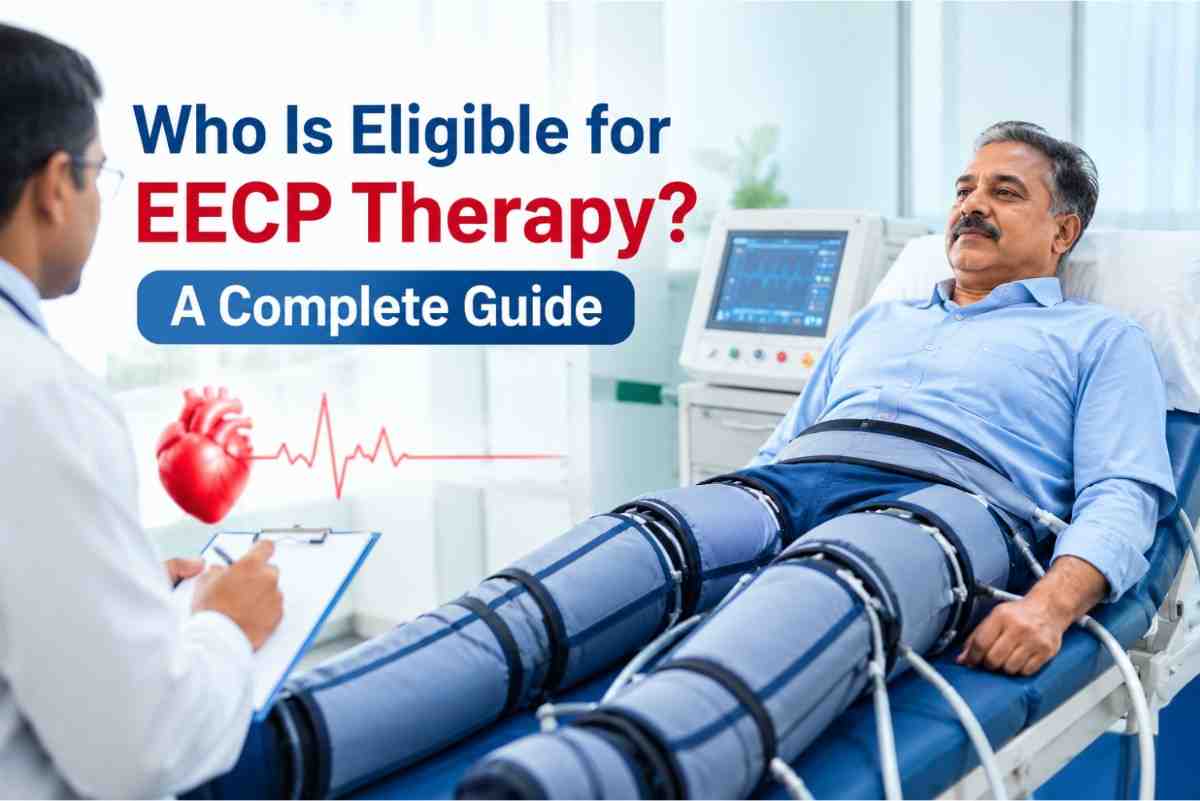
EECP is a non-invasive, outpatient treatment that uses inflatable cuffs around the calves, thighs, and buttocks. These cuffs inflate and deflate in time with your heartbeat, guided by ECG monitoring, to boost blood flow to the heart during its resting phase and ease the heart’s workload during contraction.
A typical course involves around 35 one-hour sessions over roughly seven weeks. Over time, this is thought to help stimulate collateral blood vessel growth and improve circulation, which may reduce angina symptoms for suitable patients.
Conditions EECP Is Commonly Used For
EECP is most often considered for patients with:
- Chronic stable angina that isn’t fully controlled by medication
- Coronary artery disease in patients who aren’t ideal candidates for angioplasty or bypass surgery
- Persistent symptoms after angioplasty or bypass surgery
- Heart failure with reduced ejection fraction, in select cases, as part of a broader treatment plan
It’s worth noting that having one of these conditions doesn’t automatically mean EECP is right for you — it simply means it’s worth discussing with your cardiologist.
Who Is Generally a Good Candidate?
Patients who are often considered reasonable candidates for EECP include those who:
- Have chronic stable angina despite being on optimized medication
- Are not suitable for angioplasty or bypass due to diffuse coronary artery disease
- Have health conditions (such as advanced age or other illnesses) that make invasive procedures riskier
- Have already undergone angioplasty or bypass surgery but continue to have symptoms
- Are hemodynamically stable, meaning their blood pressure and heart rhythm are reasonably well controlled
- Prefer to explore non-invasive treatment options as part of their overall care plan
Who May Not Be Suitable for EECP?
Certain health conditions generally make EECP unsuitable or require careful reconsideration. These typically include:
- Severe peripheral arterial disease or significant blockages in the leg arteries
- Uncontrolled arrhythmias, such as certain irregular heart rhythms that aren’t well managed
- Uncontrolled high blood pressure
- Significant aortic valve disease, particularly aortic regurgitation
- Decompensated or unstable heart failure
- Active blood clotting disorders or conditions requiring certain anticoagulation regimens
- Deep vein thrombosis (DVT) or a recent history of blood clots in the legs
- Aortic aneurysm, especially if significant in size
- Pregnancy
- Severe pulmonary hypertension
- Unstable angina or an active heart attack, where urgent intervention is needed rather than EECP
This isn’t an exhaustive list, and having one of these conditions doesn’t necessarily rule out EECP permanently — it simply means your cardiologist will need to assess your specific situation carefully, and in some cases, treat the underlying issue first.
Common Causes and Risk Factors for the Conditions EECP Treats
Since EECP is primarily used for angina related to coronary artery disease, it helps to understand what typically leads to this condition:
Common causes:
- Plaque buildup (atherosclerosis) narrowing the coronary arteries
- Long-standing high blood pressure
- High cholesterol, particularly elevated LDL
- Diabetes or insulin resistance
- Chronic inflammation affecting blood vessels
Risk factors:
- Age (higher risk after 45 in men, 55 in women)
- Smoking or tobacco use
- Sedentary lifestyle and obesity
- Family history of early heart disease
- Diabetes and metabolic syndrome
- Chronic stress
Symptoms That May Prompt an EECP Evaluation
You might be referred for an EECP evaluation if you experience:
- Chest tightness or pain during exertion that persists despite medication
- Shortness of breath with everyday activities
- Fatigue that limits your daily function
- Ongoing angina after a previous angioplasty or bypass procedure
How Eligibility Is Diagnosed and Assessed
Before recommending EECP, your cardiologist will typically evaluate:
- Medical history — Prior cardiac events, procedures, and other health conditions
- ECG — To check heart rhythm and rule out significant arrhythmias
- Echocardiogram — To assess heart valve function and overall pumping ability
- Blood pressure control — Ensuring it’s reasonably well managed
- Vascular assessment — To rule out significant peripheral arterial disease or DVT
- Stress testing, where applicable, to understand functional capacity
This evaluation isn’t just a formality — it’s what protects you from starting a treatment that isn’t appropriate for your specific health profile.
Treatment Options Beyond EECP
If EECP isn’t suitable for you, or if it’s being considered alongside other treatments, options generally include:
Lifestyle modification — Diet, exercise, weight management, and smoking cessation, which remain foundational regardless of other treatments.
Medications — Statins, antiplatelet agents, beta-blockers, and anti-anginal drugs to manage symptoms and underlying risk factors.
Angioplasty (PCI) — Appropriate for significant blockages, particularly in acute or urgent situations.
Bypass Surgery (CABG) — Considered for multi-vessel disease or when other options aren’t suitable.
Cardiac Rehabilitation — A structured, supervised program supporting recovery and long-term heart health.
Your cardiologist will help determine which of these, alone or in combination, fits your specific situation.
Is EECP Suitable for Elderly Patients?
Age alone doesn’t automatically disqualify someone from EECP. Many older adults with chronic angina who aren’t ideal candidates for invasive procedures are considered for this therapy. That said, eligibility still depends on the same core factors — heart rhythm, blood pressure control, vascular health, and overall stability — rather than age by itself. A thorough evaluation helps determine whether an elderly patient can safely tolerate the course of treatment.
Benefits of Early Medical Evaluation
Getting evaluated as soon as symptoms appear, rather than waiting, gives you and your cardiologist more clarity and more options. Early evaluation helps:
- Confirm whether EECP or another treatment is more appropriate for your case
- Identify and address any conditions that might need to be managed before starting EECP
- Reduce the chances of delays once you decide to proceed with treatment
- Support better-informed, less rushed decision-making
Lifestyle Tips for Better Heart Health
Whatever treatment path is right for you, these habits generally support better outcomes:
- Follow a heart-healthy diet low in saturated fat, salt, and added sugar
- Engage in regular physical activity within limits approved by your doctor
- Maintain a healthy weight
- Quit smoking completely
- Manage stress through sleep, relaxation, or counseling
- Take prescribed medications consistently
- Keep up with regular cardiology follow-ups
Frequently Asked Questions
1. Who is generally eligible for EECP therapy?
Patients with chronic stable angina that persists despite medication, particularly those who aren’t ideal candidates for angioplasty or bypass, are commonly considered. Final eligibility depends on a cardiologist’s evaluation.
2. Can I get EECP if I've already had a stent or bypass surgery?
Yes, many patients who continue to have symptoms after these procedures are considered for EECP, subject to evaluation.
3. Is EECP suitable for diabetic patients?
Diabetes alone doesn’t exclude someone from EECP. Many diabetic patients with chronic angina are considered candidates, based on their overall cardiac and vascular assessment.
4. Can elderly patients undergo EECP?
Age by itself isn’t a barrier. Eligibility depends more on overall cardiac stability and vascular health than age.
5. Who should avoid EECP?
Patients with severe peripheral arterial disease, uncontrolled arrhythmias, uncontrolled high blood pressure, significant aortic valve disease, or active blood clotting issues are generally not suitable candidates. A cardiologist can confirm this after evaluation.
6. Is EECP suitable for someone with an active heart attack?
No. EECP is not intended for unstable angina or an active heart attack — these require urgent, immediate care.
7. Can I try EECP if I have high blood pressure?
If your blood pressure is uncontrolled, this typically needs to be managed first. Well-controlled hypertension is generally not a barrier.
8. Does having heart failure rule me out?
Not necessarily, though decompensated or unstable heart failure typically needs to be stabilized first. Your cardiologist can advise based on your specific condition.
9. Can pregnant women undergo EECP?
EECP is generally not recommended during pregnancy.
10. How do I find out if I'm eligible?
The only reliable way is a consultation and evaluation with a cardiologist, including relevant tests like an ECG and echocardiogram.
11. Is a leg condition a barrier to EECP?
Significant peripheral arterial disease or a history of blood clots in the legs (DVT) can affect eligibility, since the therapy involves cuffs on the legs.
12. If I'm not eligible now, can that change later?
In some cases, yes — if an underlying issue (like uncontrolled blood pressure) is brought under control, eligibility may be reassessed.
When Should You Consult a Cardiologist?
Consider scheduling a consultation if you experience:
- Ongoing angina despite taking prescribed medication
- Shortness of breath during routine activities
- Persistent symptoms after a previous cardiac procedure
- Uncertainty about which treatment options are appropriate for your condition
Seek emergency care immediately if you experience sudden, severe chest pain, pain radiating to the arm or jaw with sweating or nausea, or sudden difficulty breathing — these can indicate a heart attack and require urgent attention, not a scheduled visit.
Why Choose KGK EECP Hospital?
KGK EECP Hospital in Anna Nagar, Chennai, offers focused cardiology care with expertise in EECP therapy and non-surgical heart treatment. The team conducts a thorough evaluation of each patient’s cardiac and overall health status before recommending EECP, helping ensure that treatment decisions are based on individual suitability rather than a one-size-fits-all approach.
Patients wondering whether they qualify for EECP can schedule a consultation to have their specific case reviewed by the cardiology team.
Conclusion
EECP eligibility isn’t determined by a single factor — it depends on a combination of your heart rhythm, blood pressure control, vascular health, and overall cardiac stability. While many patients with chronic stable angina are reasonable candidates, certain conditions may make the therapy unsuitable, at least until they’re addressed.
The only way to know for certain whether EECP is right for you is through a proper evaluation with a qualified cardiologist. If you’re wondering whether you qualify, consider scheduling a consultation to have your specific situation assessed.

About Author
At placerat eleifend nulla inceptos per dolor lacinia posuere. Rhoncus sociosqu dolor pharetra torquent interdum curabitur erat pellentesque.
Share Post :
Recent Posts
-
 Exercise After a Heart Diagnosis: What Is Safe and What Isn't
 -
 Heart-Healthy Diet Tips for Preventing Coronary Artery Disease
 -
 Cholesterol and Heart Health: What Your Numbers Really Mean
 -
 High Blood Pressure and Heart Disease: Understanding the Risk
 -
 Diabetes and Heart Disease: Why Early Prevention Matters
Categories
- What is EECP? (Educational)
- EECP vs Surgery (Comparison)
- Heart Health Tips Diabetes & Heart Care
- Patient Stories
- EECP in Tamil (தமிழில் EECP)
- Doctor Articles & Expert Advice
Subscribe Newsletter
Signup our newsletter to get update information, news, insight or promotions.
