
Is EECP a Safe Alternative for Patients with Heart Blockage?
Introduction
If you’ve recently been told you have a blockage in your heart’s arteries, it’s natural to feel unsettled. Many patients come to us asking the same question: “Is there a way to treat this without surgery?” That question is exactly what brings most people to learn about EECP for heart blockage.
Enhanced External Counterpulsation has been used for decades to help patients manage chest pain when other treatments haven’t fully worked, or when surgery carries too much risk. But EECP isn’t a one-size-fits-all solution, and understanding where it fits — and where it doesn’t — is essential before making any treatment decision. This article walks through what EECP actually does, who it may help, and how it compares to other options, so you can have a more informed conversation with your cardiologist.
What Is EECP?
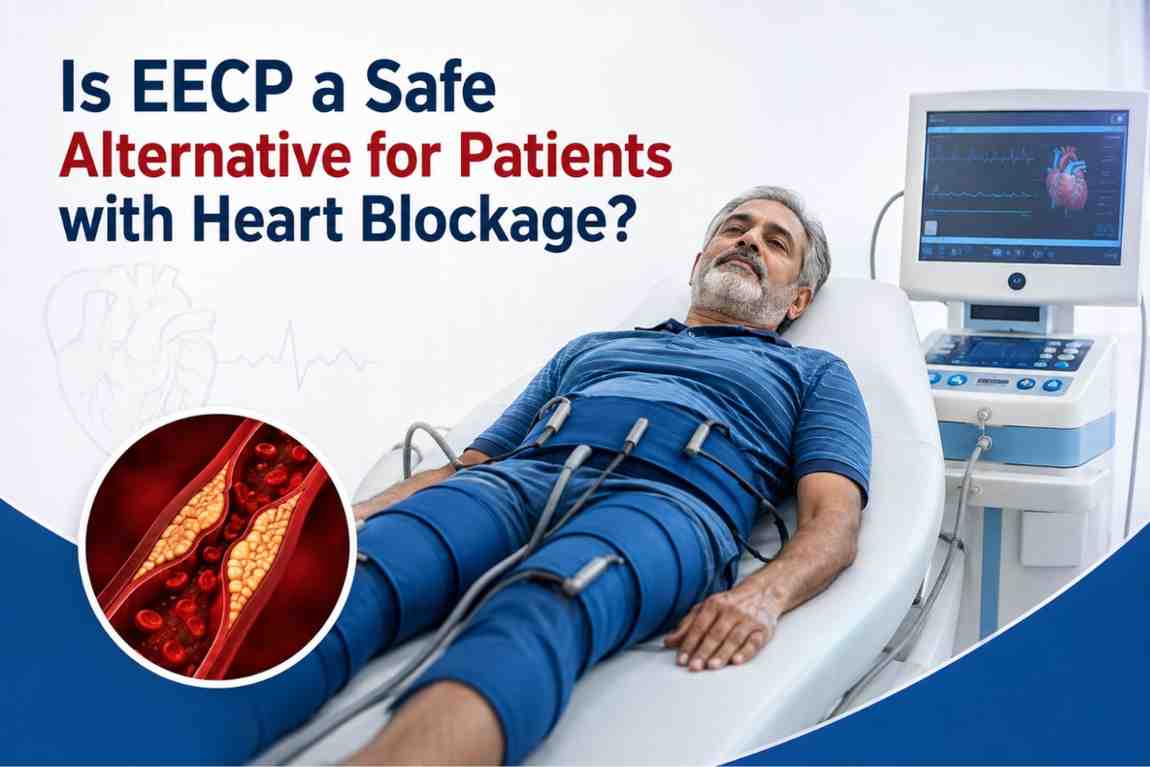
EECP stands for Enhanced External Counterpulsation. It’s a non-invasive, outpatient therapy that uses three sets of pneumatic cuffs wrapped around the calves, lower thighs, and upper thighs. These cuffs inflate and deflate in precise coordination with your heartbeat, timed using an ECG.
When the heart relaxes between beats (diastole), the cuffs inflate in a sequential wave from the legs upward. This pushes blood back toward the heart, increasing blood flow to the coronary arteries at the exact moment they’re able to receive it. When the heart contracts to pump blood out (systole), the cuffs release quickly, reducing the resistance the heart has to pump against.
Over a full course of treatment — typically 35 one-hour sessions spread across 7 weeks — this repeated mechanical action is believed to encourage the growth of small collateral blood vessels around blocked or narrowed arteries, improve blood vessel function, and reduce the frequency and severity of angina episodes for many patients.
What Causes Heart Blockage?
Heart blockage, more accurately called coronary artery disease (CAD), develops when fatty deposits — plaque — build up inside the walls of the arteries that supply blood to the heart muscle. Over time, this plaque narrows the artery, restricting blood flow.
Common contributing factors include:
- High LDL (“bad”) cholesterol and low HDL (“good”) cholesterol
- Long-standing high blood pressure
- Diabetes or insulin resistance
- Smoking and tobacco use
- Chronic inflammation
- Sedentary lifestyle and obesity
- Family history of early heart disease
Symptoms of Coronary Artery Blockage
Symptoms vary depending on how severe the blockage is and how much it restricts blood flow. Common signs include:
- Chest tightness, heaviness, or pain (angina), often triggered by exertion or stress
- Shortness of breath
- Fatigue that seems disproportionate to activity
- Pain radiating to the arm, jaw, neck, or back
- Sweating, nausea, or lightheadedness during episodes
Some patients, particularly those with diabetes, may have “silent” blockages with few or no noticeable symptoms, which is why regular screening matters for at-risk individuals.
Who Is at Risk?
Certain groups face a higher likelihood of developing coronary artery blockage:
- Individuals over 45 (men) or 55 (women)
- People with diabetes or prediabetes
- Those with high blood pressure or high cholesterol
- Smokers and former heavy smokers
- People with a family history of heart disease
- Individuals who are overweight or physically inactive
- Patients under chronic stress
How Is Heart Blockage Diagnosed?
Diagnosis typically involves a combination of tools, and the exact approach depends on your symptoms and risk profile:
- ECG (Electrocardiogram): Records the heart’s electrical activity
- Echocardiogram: Uses ultrasound to assess heart structure and function
- Stress Test (TMT): Evaluates how the heart performs under physical exertion
- CT Coronary Angiography: Provides detailed imaging of the coronary arteries
- Invasive Coronary Angiography: The gold-standard test for directly visualizing blockages, usually done when intervention is being considered
No single test tells the whole story — a cardiologist interprets these results together with your symptoms and history to determine the extent of blockage and the safest treatment path.
Treatment Options for Heart Blockage
Treatment is rarely one-size-fits-all. Depending on severity, several approaches may be used together:
Lifestyle modification — Diet changes, regular exercise, weight management, and quitting smoking form the foundation of any treatment plan, regardless of what other therapies are used.
Medications — Statins, antiplatelet agents, beta-blockers, and blood pressure medications are commonly prescribed to control risk factors and reduce strain on the heart.
Angioplasty (PCI) — A catheter-based procedure that opens a blocked artery, often with a stent placed to keep it open. Typically used for significant blockages, especially in acute settings.
Bypass Surgery (CABG) — A surgical procedure that reroutes blood flow around severely blocked arteries. Usually reserved for multi-vessel disease or when other options aren’t suitable.
EECP — A non-invasive option generally used for patients with chronic, stable angina who continue to have symptoms despite medication, or who aren’t candidates for angioplasty or surgery.
Cardiac Rehabilitation — A structured, supervised program of exercise and education that supports recovery and long-term heart health after any cardiac event or procedure.
It’s important to understand that these options aren’t necessarily competing with each other — many patients use a combination, guided by their cardiologist’s assessment of their specific condition.
When Might EECP Be Considered?
EECP is generally considered for patients who:
- Have chronic stable angina that persists despite optimal medication
- Are not good candidates for angioplasty or bypass surgery due to diffuse disease, other health conditions, or personal risk factors
- Have already undergone angioplasty or bypass but continue to experience symptoms
- Prefer to explore non-invasive options before considering surgery, in consultation with their doctor
EECP is generally not used as a substitute for urgent revascularization in patients with unstable angina, an active heart attack, or blockages that require immediate intervention. Candidacy for EECP depends on a full cardiac evaluation, and your cardiologist will assess factors like heart rhythm, blood pressure, and the presence of certain vascular or valve conditions before recommending it.
Benefits of Early Medical Evaluation
Getting evaluated as soon as symptoms appear — rather than waiting to see if they pass — gives you and your cardiologist more options. Early diagnosis often means:
- A wider range of treatment paths to choose from
- Better ability to manage risk factors before they cause further damage
- Reduced likelihood of an emergency situation down the line
- More time to make informed, unhurried decisions about your care
There’s no need to wait for a crisis to take your heart health seriously.
Lifestyle Tips for Better Heart Health
Whatever treatment path you and your cardiologist choose, these habits support better outcomes:
- Eat a diet rich in vegetables, whole grains, lean protein, and healthy fats; limit saturated fat, salt, and added sugar
- Aim for at least 150 minutes of moderate physical activity per week, as approved by your doctor
- Maintain a healthy weight
- Quit smoking and limit alcohol intake
- Manage stress through sleep, relaxation practices, or counseling
- Take prescribed medications consistently, and never stop them without your doctor’s guidance
- Keep regular follow-up appointments to monitor blood pressure, cholesterol, and blood sugar
Frequently Asked Questions
1. Is EECP painful?
No. Most patients describe a firm squeezing sensation on the legs, similar to a strong hug, rather than pain.
2. How long does a full course of EECP take?
A standard course is typically 35 sessions, one hour each, usually done five days a week over about seven weeks.
3. Can EECP replace angioplasty or bypass surgery?
Not necessarily. EECP is generally used for different clinical situations than these procedures. Your cardiologist can advise whether EECP, another treatment, or a combination is appropriate for your case.
4. Are there side effects?
Some patients experience mild skin irritation, leg discomfort, or fatigue during treatment. Serious side effects are uncommon but should be discussed with your doctor beforehand.
5. Who should avoid EECP?
Patients with certain conditions — such as severe leg vascular disease, uncontrolled arrhythmias, uncontrolled high blood pressure, significant valve disease, or blood clotting disorders — may not be suitable candidates. Only a cardiologist can determine this.
6. How soon will I notice a difference?
Some patients report reduced angina symptoms partway through the course, while others notice improvement closer to completion. Response varies by individual.
7. Is EECP a permanent cure for blocked arteries?
EECP does not remove existing blockages. It’s aimed at improving blood flow and reducing symptoms, and long-term benefit still depends on continued risk-factor management.
8. Can I continue my heart medications during EECP?
Yes, generally patients continue their prescribed medications unless your cardiologist advises otherwise.
9. Is EECP covered by insurance?
Coverage varies by insurer and country. It’s best to check directly with your insurance provider and the hospital’s billing department.
10. How do I know if I'm a candidate?
A cardiologist will review your medical history, test results, and current symptoms to determine if EECP is a safe and appropriate option for you.
When Should You Consult a Cardiologist?
You should schedule a cardiology consultation if you experience:
- Recurring chest discomfort, especially during exertion
- Shortness of breath with everyday activity
- Unexplained fatigue, particularly if you have risk factors like diabetes or high blood pressure
- A family history of heart disease and you haven’t been screened recently
Seek emergency care immediately if you experience sudden, severe chest pain, chest pain accompanied by sweating and nausea, pain spreading to the arm or jaw, or sudden shortness of breath — these can be signs of a heart attack and require urgent attention, not a scheduled consultation.
Why Choose KGK EECP Hospital?
KGK EECP Hospital in Anna Nagar, Chennai, is a dedicated cardiology care center with a focus on EECP and other non-surgical approaches to managing heart disease. The hospital’s team works with patients to evaluate their individual condition and discuss options that align with their diagnosis, medical history, and personal circumstances.
Patients considering EECP or other non-invasive heart care options can request a consultation to review their test results and discuss whether EECP fits into their overall treatment plan alongside their existing cardiology care.
Conclusion
Heart blockage doesn’t have a single universal treatment — the right path depends on your specific diagnosis, symptoms, and overall health. EECP offers a non-invasive option that has helped many patients with chronic angina find relief, particularly those who aren’t ideal candidates for angioplasty or surgery, but it isn’t a substitute for these procedures when they’re clinically necessary.
The most important step is an honest conversation with a qualified cardiologist who can review your specific case and help you understand which options make sense for you. If you’ve been living with ongoing chest discomfort or have questions about EECP, consider scheduling an evaluation to discuss your heart health in detail.

About Author
At placerat eleifend nulla inceptos per dolor lacinia posuere. Rhoncus sociosqu dolor pharetra torquent interdum curabitur erat pellentesque.
Share Post :

Categories
- What is EECP? (Educational)
- EECP vs Surgery (Comparison)
- Heart Health Tips Diabetes & Heart Care
- Patient Stories
- EECP in Tamil (தமிழில் EECP)
- Doctor Articles & Expert Advice
Subscribe Newsletter
Signup our newsletter to get update information, news, insight or promotions.
